
My research over the weekend threw up this subject – Geopolymer Concrete.
Now – History is My Thing, so this information needs other brains to make sense of it or even nonsense of it.
Please :o)
WikiWhatever on Geopolymer Cement
A full quote of Fomenko/Nosovskiy on Concrete and the Philosopher’s Stone.
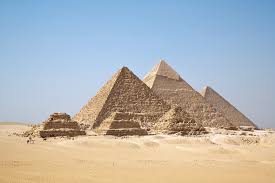
“In [5v2], ch.7, we are, among other things, trying to deal with the issue of the pyramids’ construction. The Egyptologists paint beautiful, but fantastical pictures on this subject for us. And it is not just about the pyramids, but also about other colossal constructions of Ancient Egypt. We are told about vast crowds of ‘ancient Egyptian slaves’ who allegedly cut blocks of stone weighting up to 200-500 tons in the mountains, moreover, supposedly with copper hack saws (?!). Then these monstrous blocks were allegedly dragged across the sand, in some mysterious way ferried across the Nile, and eventually from them, like from some little blocks, allegedly the pyramids were assembled. This being said, the height of the Great Pyramid of Cheops (Khufu) is approximately 140 metres.
Up until now they have come up with some fairy tale notions – how the enormous blocks were transported and supposedly lifted. On paper they draw some ingenious elevating machinery or gigantic sand ramps by which allegedly large-tonnage blocks were dragged up to the height of tens of metres. And to think that some of these blocks weigh several hundred tons! See [464], p.189.
In fact there are no puzzles there. There is only one puzzle: how could the Egyptologists ‘not see’, that the great majority of the blocks of the big pyramids, apart from the veneer and some internal constructions, WERE MADE OF CONCRETE.
The problem of rock and ore fragmentation in antiquity was solved after a sort of shattering of grain – mortars, attrition mills, grindstones. In the region of the gold Gebeit minefield in the Red Sea mountains, Doctor of Geological Science A.V.Razvaliaev examined dozens of grindstones with a diameter of up to 50-60 cm for splitting gold ore. The primary rock was ground with millstones and carried to the river bank for tossing (the washing process). There are smaller breaking devices known to us – grating machines, discovered in the Egyptian desert [5v2], ch.7.
This simple technology quickly resulted in the invention of concrete. What is concrete? In order to make it you need to grind down primary rocks into a dust-like powder. It’s easiest to use soft formations. For example limestone, the sources of which are situated in the pyramids field in Egypt. In order for the powder to turn into dry cement it is necessary to thoroughly dry it or bake it in a fire for the moisture to evaporate. But in Egypt’s arid and hot conditions, where rain falls sometimes only every five years [5v2], ch.7, the special dehumidifying of the powder was unnecessary. The thin dry powder is then sifted into a kind of mould and then into an encasement. This is then filled with water and mixed together. The solution solidifies and turns into stone. I.e. into concrete. Sometimes powder was mixed up with small finely broken stones. In this case there were fine little stones embedded in the final block.
After some time it becomes difficult to distinguish such concrete blocks apart from those carved out of the same rock, as they disintegrate and take the form of the ‘natural stones’.
Many years ago a French chemistry professor of the University of Bern Joseph Davidovits put forward an interesting hypothesis [1092]. Analysing the chemical make-up of the ‘monoliths’ of which the pyramids are made of, he suggested that they were comprised of concrete and determined 13 components of which it could have been made. Just several crews of the ‘ancient’ Egyptian concrete stone layers could have easily erected a pyramid 100-150 metres high. And moreover, in a rather short amount of time. In any case not dozens of years.
J.Davidovits founded a new branch of applied chemistry called geopolymer chemistry. ‘Any rock can be used in a finely fragmented state, and geopolymer cement made of it is practically indistinguishable from the natural stone. Geologists who are unfamiliar with the possibilities of geopolymer chemistry… mistake geopolymer cement for natural stone… Neither high temperatures, nor high pressure are required to produce such artificial stone. Geopolymer concrete quickly sets under the room temperature and turns into a beautiful artificial stone’ [1092], p.69.
To invent geopolymer cement the only thing necessary was many years of observations and experiments. The alchemists could have done this perfectly well. The geopolymer cement of the pyramids, statues and obelisks of Egypt was in fact invented by the alchemists, however not ‘ancient’ alchemists, but mediaeval ones. In the Middle Ages alchemy was one of the principal sciences.
So now the multiple riddles of the ‘ancient’ Egyptian stone masonry can be explained. The puzzles appeared from not understanding that in the majority of cases it was geopolymer cement. The statues, mysterious vessels-amphoras, and also the pyramids’ blocks were made of it. In each case the master-builders selected a special artificial stone. In some cases they made artificial limestone, in other – artificial granite, synthetic basalt or synthetic diorite.
Here for example are numerous stone amphoras. They are made of the hard type of stone, diorite. Some of them are harder than iron. ‘Diorite is considered to be one of the hardest stones. Modern sculptors don’t even try using these types of stone.’ [1092], p.8. So what do we see in ‘Ancient’ Egypt? THE DIORITE AMPHORAS HAVE NARROW HIGH NECKS AND BECOME WIDER TOWARDS THE BOTTOM. AT THAT THE WIDTH OF VASE’S WALL IS PRACTICALLY THE SAME EVERYWHERE. Archaeologists are trying to convince us that the amphoras are supposedly carved out. The question is how is it possible to carve out an amphora from exceptionally hard diorite via a narrow neck so that the width of its wall is the same all around? So that on the inside surface of the wall no carving marks remained! Egyptologists cannot explain this. [1092], p.119. In fact the vessels are made of the artificial stone on a regular potter’s wheel. Still unset geopolymer cement was processed like soft clay. The walls were made to be the same width. It is easy to do on the potter’s wheel. After the setting the amphoras of the hardest diorite or quartzite were produced as a result.
After the collapse of the Great Empire { aka Great TARTARY Empire G.B.} and the wars of the XVII century some of the significant mediaeval technologies were forgotten. As usual they were kept secret. The secrets of the production of damask steel, golden filigree work, granulation and the geopolymer cement were not divulged. These were secrets of state importance. In the atmosphere of chaos many things were lost. It was extremely difficult to recover them. It would have been necessary to conduct numerous experiments all over again. After the arrival of the conquerors, in Egypt for example, after the invasion of Napoleon, scientists and artisans were either killed or didn’t want to reveal their secrets to the enemy. Today they try to reconstruct some of these secrets with the aid of modern technology. Sometimes successfully, sometime not very. As it becomes clear now, the geopolymer cement is among those lost secrets.
The main aim of alchemy, which by the way appeared in Egypt (where the geopolymer cement was used the most) was to produce THE PHILOSOPHER’S STONE. I.e. ‘scientific stone’ as the word PHILOSOPHY earlier used to mean science in general. Today the historians think that the mysterious philosopher’s stone purportedly was for turning iron into gold. I.e. they are suggesting to us to think that the alchemists were wasting their time in the pursuit of nonsense. And only from time to time, at odd moments they would stumble upon something useful.
But now we understand that ‘scientific (philosopher’s) stone’ is the geopolymer cement. It is most likely that many ‘mysterious’ stone monoliths of incredible sizes – in England (Stonehenge), in Lebanon (Baalbeck) and in other places – are made of the geopolymer cement in the epoch of the Horde Empire. When the Empire collapsed a desire grew in rebellious Western Europe to uncover the secret of the philosopher’s stone. They failed. Hence appeared the legend about eternal and fruitless attempts to find the philosopher’s stone. In the end the experiments ceased and the words the ‘philosopher’s stone’ became magically endowed with fantastical meaning. Incidentally, in the history of alchemy it is considered that ‘THE PHILOSOPHER’S STONE WAS KNOWN IN EGYPT, BUT LATER THE SECRET OF ITS PRODUCTION WAS LOST [5v2], ch.7.”
 Hidden History Research