
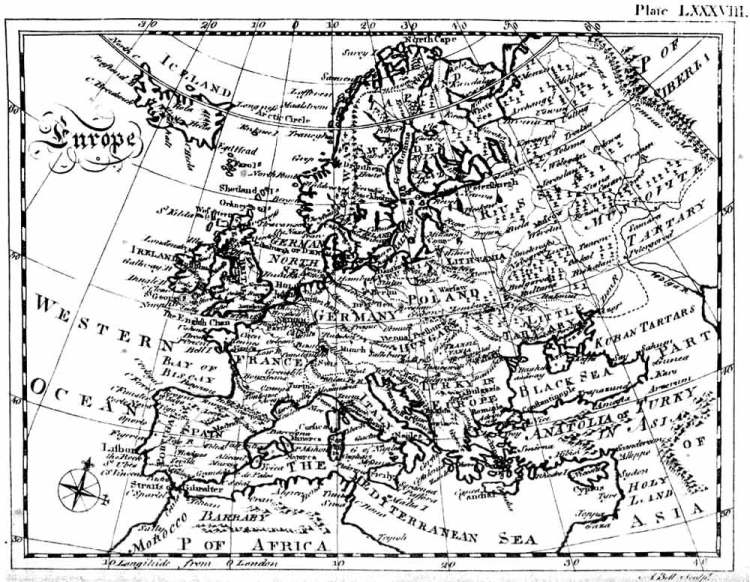
Below is the beginning of a good article – Some Aspects of Empire Management – by A.B. Nikolsky and published in 2004. It is very long and has been google-ated from Russian to English.
A very interesting read for anyone interested in how to manage and then destroy an Empire as large as Tartaria.
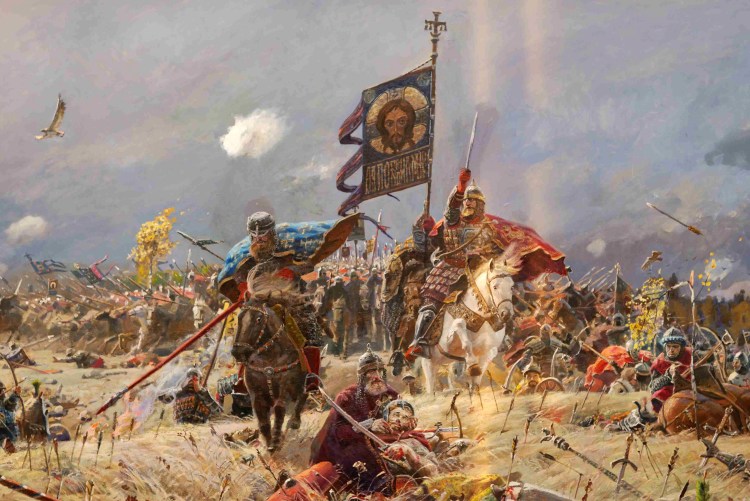
Some Aspects of Empire Management
A.B. Nikolsky
| The article analyzes the basic principles of government in the Great Horde – a united global Empire of the XIV – XVI centuries. – and the reasons for its collapse in the late XVI – early XVII centuries. Some consequences of this decay are also considered. |
| Introduction
The inevitability of the Empire and the problems of reconstruction The principle of continuous succession of human culture formulated by N.A. Morozov (see Morozov, 1924–1932) was developed by G.M. management system, which allowed to master all habitable places of the planet (see Gerasimov, 2001). In this case, a legitimate question arises: is such a reconstruction not too speculative? Indeed, from traditional history we know nothing about the existence in the past of humanity of an unprecedented geopolitical formation that covered the whole Ocumene – on the contrary, all the empires described in the sources had a very limited area of distribution and decayed long before reaching the limits of widespread expansion. However, as a result of the research of the same N.A. Morozov, and after him A.T. Fomenko in the field of historical chronology, it turns out that the traditional chronology of antiquity and medievalism accepted at present in science and society has no real scientific basis. , and is the fruit of speculative creativity of medieval scholastics of the XVI – XVII centuries (see Morozov, 1924–1932; Fomenko, 1999). If we approach the study of historical sources, refusing to link them to the conventional chronological scale, it is very quickly discovered that almost all ancient and early medieval empires are only phantom reflections of the Great Horde empire of the XIV – XVI centuries, which had their place in history due to the aforementioned scholastic activity of medieval chronologists . The first serious attempt to reconstruct the control system of the Great Empire was undertaken by GVNosovsky and ATFomenko (see Nosovsky, Fomenko, 1996, 1998, 1999). At the same time, they encountered in their work a number of almost insurmountable difficulties, among the main of which are: First, the basic principles of public administration are well known from later history, as well as from modern political practice and its scientific synthesis. It is only necessary to extrapolate these principles to a public education that sought to exercise control over the entire inhabited world, the Ocumene, and, naturally, carefully take into account all the differences arising from such a striving. Secondly, information about the past is preserved in later, and even in biased, edited sources. The method of identifying such information is well known in the source. For example, if the source’s bias is established, the commitment of its author-editor-compiler to a certain political line, then the information that contradicts this line is more likely to be closer to the facts of real events than the information, the “general line” is relevant (see, for example, Lappo -Danilevsky, 1913, issue 2, p. 642; Lurie, 1997, p. 27). The study was conducted in two stages. Initially, the theoretical prerequisites were formulated for the very possibility of effective management of the geopolitical structure, one of the main goals of which is unlimited expansion. At the second stage, information was searched for sources, which could confirm or refute the existence of such control mechanisms in real history.
Conceptual apparatus Before formulating the theoretical prerequisites for managing the Empire, it is useful to understand the meanings of the main terms used. This, firstly, will allow to avoid ambiguity in the interpretation of certain concepts in different documents and in different eras, and secondly, it can provide the key to understanding the essence of the phenomena behind these concepts. As guides to terminological labyrinths, we will use three fundamental works: M. Vasmer. Etymological dictionary of the Russian language (Vasmer, 1996); Benveniste E. Dictionary of Indo-European social terms (Benveniste, 1995); Kesler Ya.A. Alphabet and Russian-European Dictionary (Kesler, 2001). The first of these dictionaries is good primarily for its encyclopedic, and the other two are for a fundamentally new, qualitative approach to etymology: the meaning of a word is determined by its original functional meaning, and all its further evolution can be traced to this fundamental circumstance. Empire In earlier documents, the term empire is also found, but in all such cases it is meant something foreign, existing outside Russia, – either this is the Holy Roman Empire, or this is the Byzantine Empire (as the commentators of these documents believe). documents themselves such localization, as a rule, do not follow). As for the meaning of the term itself, it is quite simple: translated from the Latin imperator, it means simply the manager, and imperia – management . At the same time, the etymology of the word Lord himself remains unclear. Vasmer’s dictionary keeps a mysterious silence on this subject, insisting only on its original Slavic origin without any evidence (Vasmer, 1996, Vol.1, p.448). I will note here a very interesting version of J.A. Kesler, who paid attention to the fact that the Danes “pronounce the name of God the Father of Savaof ( Sabbaoh ), or rather the God of the Sabbath – Go ‘Sabbath, almost exactly like the Russian ” Lord “ , which is also very close to spanish huesped“master”. And if we keep in mind that the word “god” among the Slavs meant happiness (cf. rich), then we have the identity of the Lord-God ”, which is formed just like“ the king-father ”(Kesler, 2001, p.31 ). Horde However, the word horde literally coincides with the Latin word ordo , from where the root of ord- moved to Western European languages (English, German, French). And in all these languages this word means the exact opposite – a series, an order . It turns out that, in both Turkic and Western European languages, the term in question denotes concepts that are similar in meaning. And only the Russian language got the word with the opposite meaning. According to Ya.A.Kesler, the Russian Horde , it’s also Rada , comes from the original root ryd meaning the given word, the oath. “Therefore, the“ Horde ”is a jury warrior, they are Cossacks, they are legionaries, they are also knights” (Kesler, 2001, p.22, see also p.214). In this paper, the term horde when used in capital letters is used as one of the synonyms of the term Empire , and from the lower case – as the name of one of the main imperial structures – the army, the army providing the imperial idea through its distribution in Oikumen. Khan, Caesar, Caesar, King For example, the well-known Devlet-Girey, the Crimean Khan (as it is commonly called in later historiography), which is still to be discussed, is called exclusively the Crimean king in all Russian chronicles of the 17th – 18th centuries. King. Rex. Among the few Russian documents of the 16th century that have survived to the present day, there are letters and acts of ratification mentioning various European kings and queens. Without considering now the question of the possible apocryphism of these sources, let us try to reflect on the term king itself in more detail: what meaning could it have at that time? When trying to figure out the origin of this interesting word, we are faced with the most genuine etymological mystery, on the verge of sensation. It seems that despite the legality the question turned out to be rhetorical. And in this case, does it make sense to look for another etymology? The word rex, witnessed only in Italic, Celtic and Indian, that is, on the western and eastern outskirts of the Indo-European range, belongs, according to E. Benveniste, to a very ancient group of religious and legal terms. Comparison lat. rego with gr. “stretching, stretching” and studying the original meaning of reg- in Latin lead the linguist to the conclusion that rex is more a priest than a king in the modern sense, i.e. a person who has the power to outline the location of the future city or to define the features of the rule of law (Benveniste, 1995, pp.249-252). As for the Greek term, usually identified with the king, then E. Benvenist believes that the person called so carried out magiko-religious functions, probably originally defined by the three-party structure of society (as described below). The scepter – a symbol of his power – was originally just a stick, a traveling staff of the messenger who transmitted the commanding speeches (Benvenist, 1995, p.258). Thus, Basileus also turns out to be a variety of the imperial governor.
General approaches to the organization of management Formulating the task of unlimited global expansion, the Supreme Government of the Empire inevitably had to set itself the question of ensuring the manageability of the geopolitical entity being created. And not just to put, but to find mechanisms for solving these issues. First, you need an adequate power resource.. Any imperious decision taken in the center (in the capital of the Empire – the khan rate) must be strictly enforced at any point of the controlled territory – otherwise it is simply meaningless to talk about the presence of central imperial power. Consequently, a coercion mechanism is needed for those who disagree with the decision. The second, no less, and in a certain sense, more important: ideology. Power holding on to naked compulsion cannot be sustained. It is much easier to manage when the one who governs and the one who is governed is like-minded in achieving a common goal. The third problem to be solved is communication.. An order issued in the center must be able to reach the executor, no matter how far from the center he is, even on the opposite side of the globe. In such circumstances, the issue of communication acquires the most important, fundamental importance. Another means by which the Empire solved both the problem of communications and the problem of ideological unity is the presence of a single language of communication throughout the Empire. It is clear that the presence of such a language in the most favorable way affects both the communication possibilities and the mutual understanding of the subjects. Ya.A. Kesler established that such a single language in the Great Horde was the Old Russian, or Old Slavonic, language, the direct heir of which is modern Russian (see Kesler, 2001, 2002). And the fourth , without which it can not do, is the economy. To effectively manage the Empire, it is necessary to have effective commodity-money relations throughout its territory.
Part 2 will follow shortly…. |
 Hidden History Research