Part 3
Zodiac Henry Percy.
“Elizabethan portrait” of the XX century
A.V. Lantratov
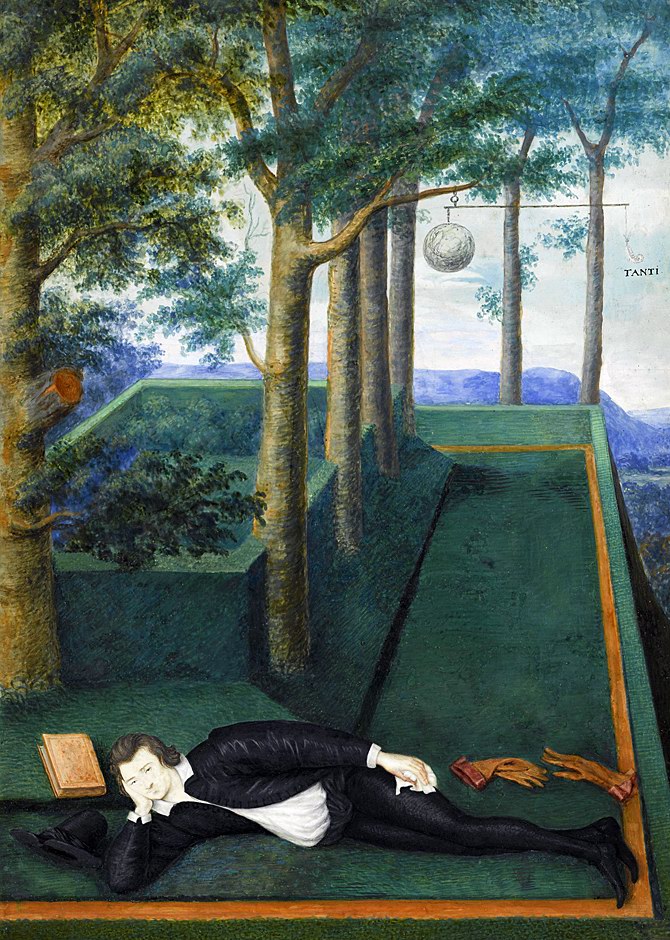
Generally speaking, the miniature in question, fig. one, at first glance, it seems that its creator was trying not so much to convey on it a certain horoscope (whatever it was), but to create on its basis the most mysterious “picture”. To interpret the meaning of which, as we read above, some researchers tried to be guided by the “magic proportions and” number squares “of Agrippa”, as well as “diagrams and geometric forms understood as loaded with symbolic and Pythagorean meanings.” In addition, enriched with “Renaissance occultism, in its hermetic and kabalistic izvoda”. In a word, the author is obviously more than successful in “mystery”. But, being carried away, I overdid it a bit, discarding some of the details essential for decoding the horoscope (and its subsequent independent dating). Anyway, exactly the impression
But suppose that it is not so and the image in fig. 1 is even a “mysterious”, but still a complete horoscope. That is, it contains everything necessary to restore some date. The question is, is it possible, on the basis of such a premise, to offer any interpretation of the composition presented on it, which allows to identify a more or less specific horoscope (and perform its calculation) without resorting to looking at the “end of the problem book” and not taking ready answers from there?
It turns out that although it is not obvious in advance, such an interpretation does exist and can be justified in detail.
So, let’s try to decipher the symbolic language used by the author fig. 1 and read the horoscope recorded on it.
First of all, we note that almost the entire foreground of the picture depicts a fenced garden, divided into two rectangular courtyards, one of which is part of the other. Moreover, the view of this garden is very unusual and strikingly different from those “regular” gardens, which were divided on the estates of the nobility and whose images can be seen in many old paintings, engravings and book illustrations, fig. 16-20.

Fig. 16. Portrait of lawyer William Style (1600-1679),
brush by unknown artist, dated 1636 year.
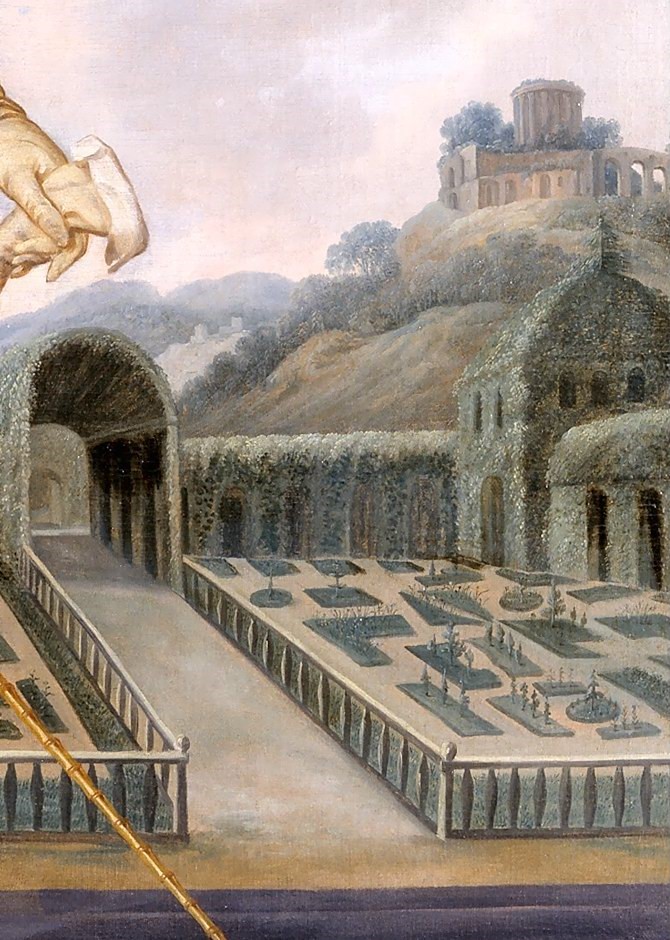
On the right in the background is a typical renaissance garden.
Tate Gallery, London
Figure 17. The image of the garden in the portrait of William Style. Enlarged fragment of fig. 16
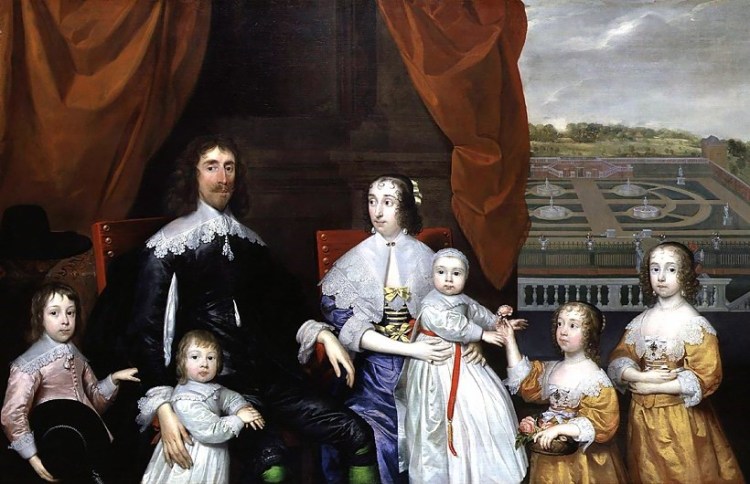
Figure 18. Arthur Capel, 1st Baron Capel (1608-1649), Member of the Long Parliament under Charles I, and his family. In the background is a garden in the family property of Little Hadham. Painting Cornelis Janssens van Köhlen, attributable approximately to the year 1640. National Portrait Gallery, London
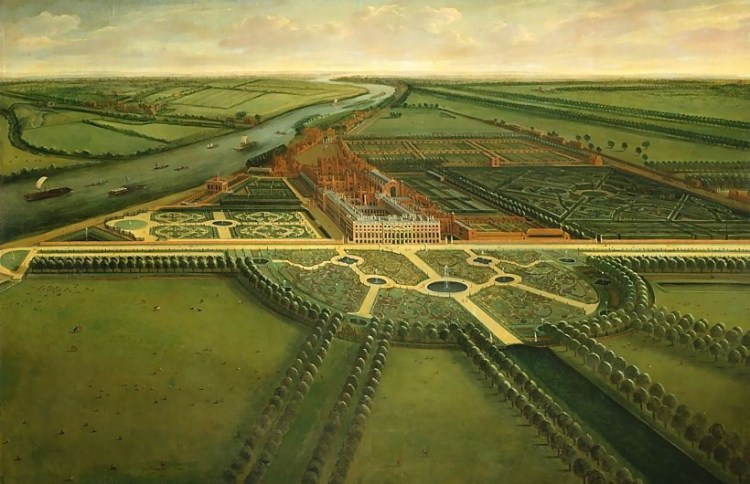
Figure 19. Panoramic view of the palace and park complex Hampton Court. Painting by Leonard Kniff, dating from 1702-1714 years. British Royal Collection
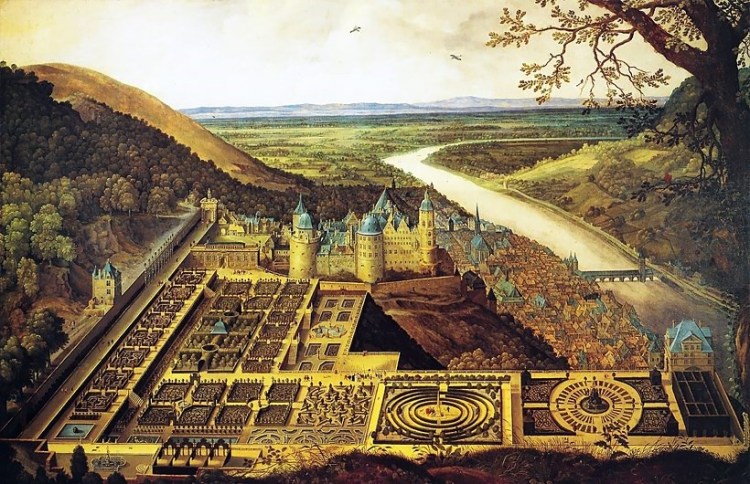
Figure 20. Heidelberg Castle and the Palatine Garden (Hortus Palatinus). Painting by Jacques Fouquier, attributable to the year 1619. Kurpfalz Museum, Heidelberg
Further, in this unusual garden, there are five trees, four of which stand in a row on the very border of the small courtyard, and the fifth – next to this courtyard, within the larger courtyard that encloses it. Two more trees are shown somewhere outside of it.
Finally, one of the four trees growing inside the garden hangs scales presented in the form of a balance bar, fig. 5. That is, the constellation Libra is depicted.
The question is, what can all this mean? From an astronomical point of view, the answer is very simple.
It is well known that Libra was previously considered part of the constellation Scorpio and was called (for example, in Almagest) its Claws. Preserved (especially in astronomical manuscripts) and the corresponding images, clearly demonstrating this duality of their perception, Fig. 21-25.
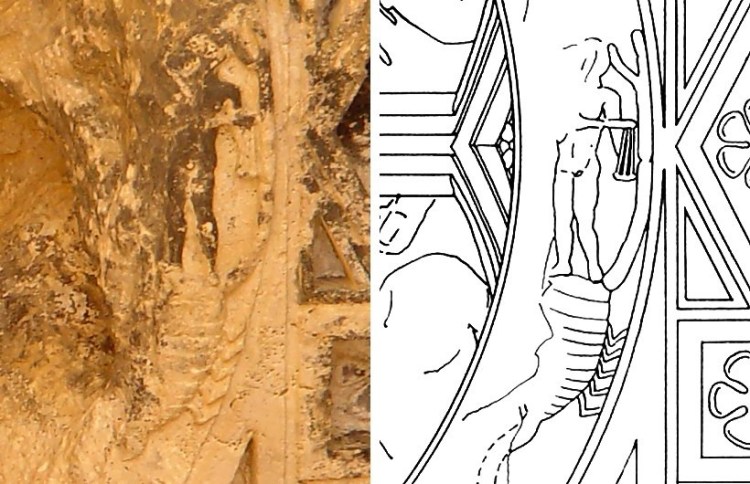
Fig. 21. Scales as Claws of Scorpio. Fragment of the “ancient” Roman
zodiac from the Temple of Bel in Palmyra (left) and its drawing (right)
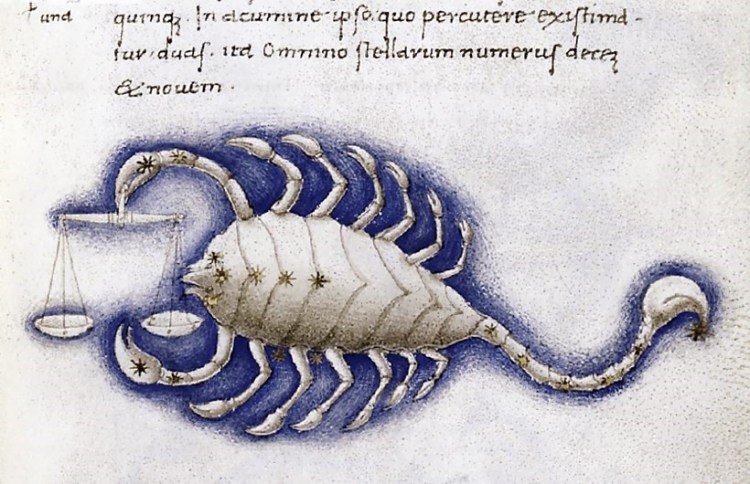
Fig. 22. Scales as Claws of Scorpio. Miniature from the manuscript of “Astronomy” by Gai Julius Gigin, attributed to the years 1465-1470. New York Public Library, Spencer Collection, Ms. Code. 28

Figure 23. Scales as Claws of Scorpio. Fragment of the celestial globe, created, as it is believed, by Gerhard Mercator in 1551

Fig. 24. Astronomical clock on St. Mark’s Square in Venice. Inside the marble circle with roman numerals engraved on it, indicating the time of day, there is a dial on which, with a different the Sun, the Moon and the Zodiac ring move in speed
(the figures of the latter belong to the end of the 15th century by historians).
In the center, surrounded by fixed stars, is the Earth.
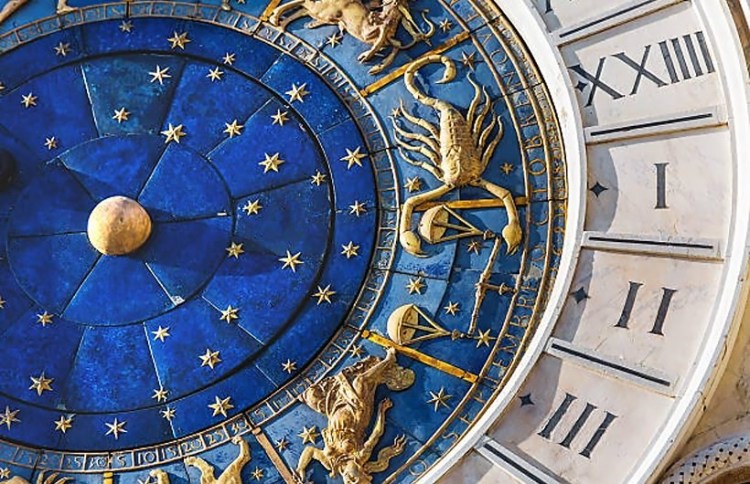
Fig. 25. Scales in the claws of Scorpio on the Venetian clock of St. Mark
Moreover, a number of old representations of the zodiacal circle have reached our days, containing not twelve, as today, but only eleven figures, without Libra, fig. 26-27.
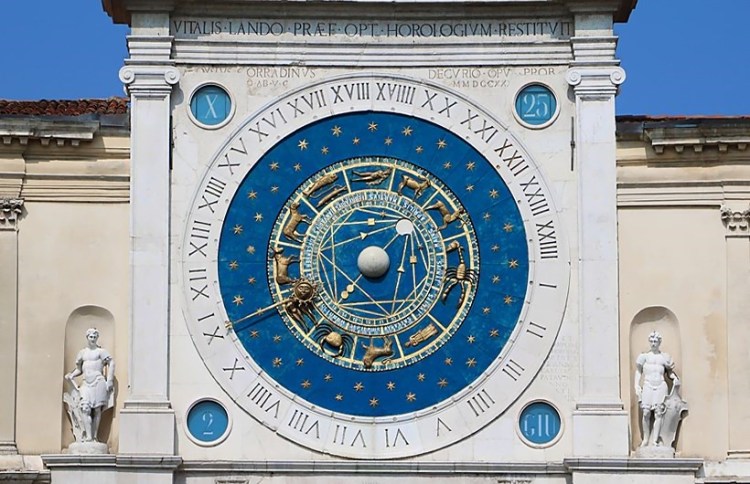
Fig. 26. Astronomical clock on Signoria Square in Padua,
attributable to the middle of the XV century. These watches are completely unique in
that there are no zodiacal scales on them, which
are replaced by the highly elongated Scorpion Claws .

Figure 27. Scorpio, the claws of which replace the missing Scales. Fragment of the dial of the Padua astronomical clock
Therefore, there is a natural assumption that the small courtyard in fig. 1 is Scorpion Claws (i.e. Libra constellation), fig. 23 , and the larger courtyard covering it is a full Scorpion, along with Claws, fig. 27 , that is, the region of two neighboring constellations – Scorpio + Libra, fig. 21 .
Thus, we obtain that the five planetary trees are shown in Scorpio and Libra.
By the way, this, in essence, the only rational, understanding of the two nested courtyards as two adjacent constellations literally immediately excludes from the number of possible solutions for the future horoscope (whatever it is) given by the author [Nesterov], that is, taken from Scaligerian “Textbook” on English history – the date of April 27, 1564, because on that day, as mentioned above, the “inner city” planets were distributed over twice as many constellations (and signs). Apparently, this is why the question about the meaning of the courtyards (as well as about the Moon) by the named author (or the astrologer who helped him) was left completely silent.
As for the two remaining trees growing outside the large courtyard, their location can be interpreted in two ways. The first and most obvious option that comes to mind is this: the corresponding two planets can be anywhere except Libra and Scorpio.
However, it is clear that such an interpretation of the symbolic meaning of the two given trees sets an extremely wide area for them – equal to almost the entire ecliptic – area. As a consequence, with further analysis based on it (more on this will be discussed below), a whole series of fundamentally acceptable options (each of which, by itself, is no better than any other) of choosing which planets should be left in Libra and Scorpio, and which – to endure it.
Based on this ambiguity, which requires for its resolution a rather large amount of preliminary calculations and subsequent painstaking checks, a “direct” interpretation of the area of acceptable location of “marginal” trees does not look very desirable and the thought arises to try to find some more subtle meaning that could be invested in them the creator of the zodiac in question. Can we guess which one? Yes you can. The corresponding idea is quite simple: two practically identical, adjacent “twin” trees depict not only two planets, but, at the same time, indicate their exact location. In the constellation Gemini.
Of course, this can be objected to by the fact that this constellation was depicted by the same (or very similar), but still human figures, and not trees at all. But so after all, the planets in the same way were depicted in ancient astronomy almost always in human or bestial form. The case under consideration is obviously atypical; and because such a double reading seems quite acceptable. In addition, it is worth recalling that it was not we, but the historians themselves who were the first to suggest the identification of trees with planets. We here only bring their idea to its logical conclusion.
As an additional confirmation of the admissibility of the double identification of trees and with the planets, one can cite, in particular, such an argument. It is well known that in the Christian tradition the Virgin Mary is related to the Moon (whereas Christ is to the Sun). But she, like the Virgin Mary, can be identified with the constellation of the Virgin. And in some cases, both of these identifications are combined, with the result that the image of the Mother of God at the same time personifies both the Moon and the Moon, that is, it serves as a symbol having the astronomical meaning of “Moon in Virgo”.
So, suppose that we correctly understood the calculation of the creator of the horoscope presented in fig. 1 , and two planets must be in Gemini. The question is, which ones? It is easy to determine. First of all, it is obvious that this cannot be the Sun, Venus, or Mercury, since the simultaneous presence of two of them in Gemini, and the third in Libra (or Scorpio) is astronomically impossible, so none of the last two planets can go so far from our luminary. In addition, it can not be the moon, because it is clearly and unambiguously depicted precisely in Libra. So, remain Mars, Jupiter and Saturn. Some two of these three planets must be in Gemini, and the other one – in Libra or Scorpio.
Of course, this decoding is not complete, since it does not completely take into account some additional nuances, which naturally follow from the analysis of fig. 1 . However, we will deal with them later, but for now, at the preliminary stage, more than enough stated above.
As a result, we get the following horoscope:
SUN, VENUS, MERCURY – in Libra or Scorpio;
LUNA – in Libra;
SATURN, JUPITER, MARS – any of the three options is possible:
1) Saturn, Jupiter – in Gemini, Mars – in Libra or Scorpio;
2) Saturn, Mars – in Gemini, Jupiter – in Libra or Scorpio;
3) Jupiter, Mars – in Gemini, Saturn – in Libra or Scorpio.
The calculation performed later with the help of the HOROS program yielded a result that exceeded preliminary expectations. Namely, it turned out that this horoscope (in all its three variants) has only one solution, lying on the interval from 1500 AD. and up to our time. This is the 18th of October old style of 1693 AD. There are no other solutions.
The input data for the solution that gave the solution is as follows:
SCALE OF CONSTELLATIONS
<0> ARIES <1> BODIES <2> TWINS <3> CANCER <4> LION <5> GIRLS <6> WEIGHTS <7> SCORPIO <8> SAGITTARIUS <9> CAPERNOR <10> AQUARIUS <11> FISH <12 = 0>
CONSTELLATION BORDERS on the ecliptic J2000 (in degrees of longitude)
<31> ARIES <56> CALF <92> TWINS <118> CANCER <137> LION <172> VIRGO <215> WEIGHTS <239> SCORPIO <266> Sagittarius <296> CAPRICANT <326> AQUARIUS <349> FISH <31 >
The table below shows the calculated positions of the planets for the found solution. The first line under the name of the planet gives its position on the ecliptic J2000 (in degrees), in the second – deviation from the Sun in longitude (also in degrees), in the third – the position on the constellation scale, in the fourth – the name of the constellation where the planet was. The last line contains the average deviation of the calculated positions of the planets from their “best points” (in degrees).
It can be seen from this table that the solution obtained cannot be called ideal, since it has at least three significant stretches.
The first of these is that Mars in this solution was in Cancer, although quite close to its border with Gemini. However, this can be explained by the fact that on October 18, the old style of 1693 was very close to Mars, at a distance of less than 5 degrees of arc, was Jupiter, and this latter was, as required, in Gemini.
If we accept this explanation, then it becomes more understandable and the reason that could push created the portrait in question, Fig.1 , an artist to choose in favor of the idea of combining the symbols of the “trees-planets” with the “constellation-trees”, instead of depicting the latter in some more explicit form (as he did with the balance weights). Namely, the picture observed on the date found is two planets (Mars and Jupiter) in close proximity to each other, while one of them is in Gemini (on the border with Cancer), and the second is a little distance away, in Cancer itself, It was described in these words: “two planets-” twin “on the border of Gemini”. And such a description, obviously, fully corresponds to what we see in the picture in question, fig. 1 .
As for the rest of the planets, then, in accordance with the data given in the table above, they are identified as follows: a tree with a balance corresponds to the Moon, the following three located in a row of trees represent Mercury, the Sun and Venus, and finally standing apart (closest to the viewer) the last tree stands for Saturn, fig. 28
Fig. 28. Saturn, Venus, the Sun, Mercury and the Moon October 18 Art. Art.
(October 28, N. Art.), 1693 AD The observation point is London.
Based on the screen of the program StarCalc
By the way, with regard to the last tree, it gets a good explanation and the fact that one of its branches is cut (sawed), while all the others have all the branches. This detail can be traced quite obvious reference to Saturn, which very often was depicted with a sickle (as a symbol of agriculture, the patron saint of which he was originally), then with a scythe (when the idea of his ominous nature). That is, with what cuts, cuts, leaves cut, fig. 29.
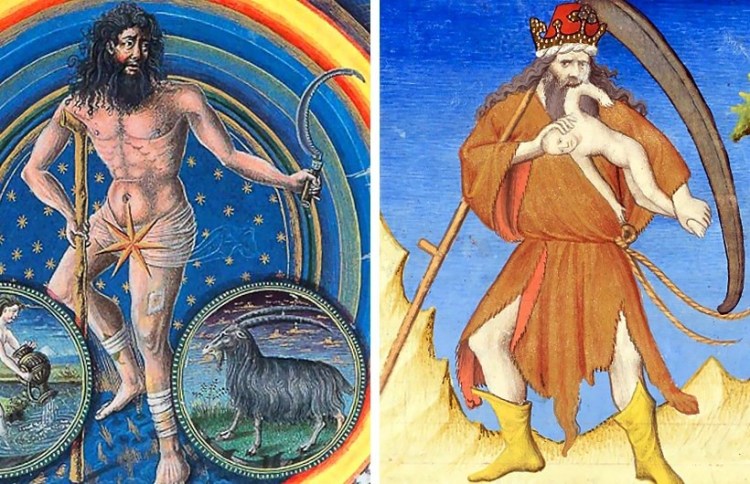
Fig. 29. Saturn with the sickle (left) and oblique (right).
Images from illustrated codes dating back to the 15th century
But back to the stretch. The second is perfectly visible in fig. 28 , – of which lies in the fact that in the solution of 1693 in Scorpio there were two planets, which is in clear contradiction with fig. 1 , on which, on the border of the small courtyard corresponding to Libra, four out of five “intragrade” trees-planets grow.
Finally, the third stretch is a continuation of the second, and its essence is that in fig. 1 moon globe hangs on the tree that is closest to the tree with the cut, which means that the moon should be closest to Scorpio from the entire group of planets in Libra. In the decision of 1693, everything was exactly the opposite: the Moon was on the border of Libra and Virgo, and Mercury and the Sun were between it and Scorpio, fig. 28 .
In the aggregate, all this makes the solution found very unlikely. However, since there are simply no other solutions that are better from a purely astronomical point of view, the horoscope obtained above does not have anything to do but a preliminary conclusion: if the symbolic language of the picture, fig. 1 , it was deciphered above correctly, then only one date can be recorded on it – October 18 of the old style of 1693 AD
But is the above transcript correct? Obviously, this can be found out only in one way – by re-analyzing fig. 1 , this time without any discounts and assumptions. However, before proceeding to it, it makes sense to accept the date already received as a certain starting point and, briefly returning to the very beginning, refer to the information that constitutes the more or less well-known history of the picture in question. In order to use them to try to delineate the time interval on which we will subsequently look for the date recorded in the pictured in fig. 1 horoscope.
- What is known about the history of the picture? When could it be written?
Is the favorite of Queen Elizabeth Henry Percy in England really depicted ?
So, we have come to the conclusion that if the decoding of the horoscope shown in Fig. 1 portrait, true, then on it, in all likelihood, is recorded the date October 18 of the old style of 1693 AD But the following question arises: how then to be with the assertion of the Scaligerian historians that this portrait depicts Henry Percy, who lived, it is believed, from 1564-1632? Does this mean that the given years of his life are erroneous, and they should be raised up by at least 50-100 years?
In principle, of course, this cannot be ruled out, but another explanation of the resulting discrepancy of dates is also possible. It lies in the fact that the portrait in question captured, in fact, is not at all the 9th Earl of Northumberland, but someone else who lived a century later. In fact, let us ask ourselves: why is it generally considered that shown in fig. one a young man – this is exactly Henry Percy, and not someone else? How did this become known? Who, when and, most importantly, in what specific way did it establish? Are there any weighty documentary evidence on this score, or, like many other things in the Scaligerian historical version, this identification rests solely on what was once expressed by someone and, for one reason or another, remained unredefined more evidentiary assumption?
Let’s figure it out. First of all, it is abundantly clear that in the very image in the portrait in question, fig. 1 , there is no way to conclude who it represents. After all, there are neither names, nor dates, nor any names on it, and the landscape itself is underlined schematically and is hardly a “photograph” of some real-life place. In a word, there is absolutely nothing that could be caught in one way or another. There is, however, a book, but it is also closed, and its name is not visible, and the cover is empty (and, accordingly, it cannot even indicate the type of activity of the portrait). To help ultimately narrow the circle of searching for possible candidates for identification with the depicted character could be a coat of arms, but he is not here either. Finally, the only one present in fig. one the word, “tanti”, is neither an anagram of the name of Henry Percy, nor a part of his motto
What else somehow stands out in Fig. one? Hat, scarf, gloves, black frock coat and white shirt. All these details (together with the above-named book), undoubtedly, describe the character and interests of the person depicted, but in no way allow him to be identified.
So how, one wonders, Scaligerian historians managed to establish that it was Henry Percy, and not someone else, we see in Figure.one? Is it possible that the young count looks at the full melancholy?
The answer to this, and with it, and to almost all the other questions voiced above, is found in the article already known to us [Strong]. It turns out the following. The earliest reference in the sources, associated with the portrait in question, dates back to 1728 and represents literally one sentence in the notebook of antiquarian George Worthy (1684-1756), who visited Northumberland House, the London mansion of Count Somerset, built around 1605, and from the 1640s to 1682, which belonged to the Percy family, and made a list of what he saw. This is a mention: “Lord Percy, lying on the grass in the gardens of Zion (Northumberland country estate — A.) died about 1585”
It’s all. No explanation of why the young man lying on the grass is precisely Lord Percy and why the surrounding landscape depicts Zion Park is not given. It is clear that the aforementioned antiquarian simply wrote down in his notebook what the hospitable hosts had told him, not bothering to find out the details. But could the owners be wrong? It is easy if we consider that since 1693 (that is, the year of the preliminary decision we obtained above) 35 years have passed, and during this time an entire generation has changed. Moreover, it was not difficult to make a mistake with the complete, as already mentioned above, the absence of inscriptions in the portrait or any other clues for identification. In addition, one cannot exclude the fact that the words in the above words could in general go about some other picture with a similar composition, fig. thirty.
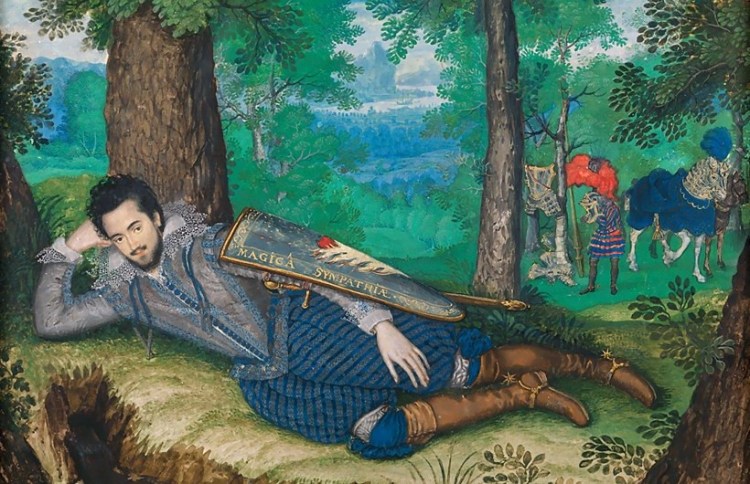
Fig. 30. Edward Herbert, Baron Cherbury (1583-1648).
Portrait of Isaac Oliver, dated 1613-1614 years.
The composition of this picture – a young man lying on the grass – is
no worse than fig. 1, consistent with the description left by J. Virtue.
Powys Castle Picture Gallery (Powys County, Wales)
Nevertheless, in general, this – the earliest – mention of some kind of picture, according to the description completely corresponding to fig. 1 , it is important that it is in agreement with the date we found above, and the latter does not contradict it.
We continue. After 1728, for the next two hundred years, the picture disappears from view (although in [Strong] it lists the successive owners, but the corresponding list is clearly made backdating for general connectivity, since not a single reference to archival sources or published studies not attached to it). For the first time, it was only briefly presented to the public in 1937, when it was put up for sale (as part of the collection of the Counts of Aylesford) at the auction of the Christie’s auction house entitled “Portrait of an Unknown Young Man” Three years later (in April 1940) it is sold again (at the auction of Frederick Muller), but now as a portrait of Philip Sidney, younger contemporary of Henry Percy, pic. 31-32, – and after forty more years, in 1981, he enters the Amsterdam Rijksmuseum, where he has been kept since.
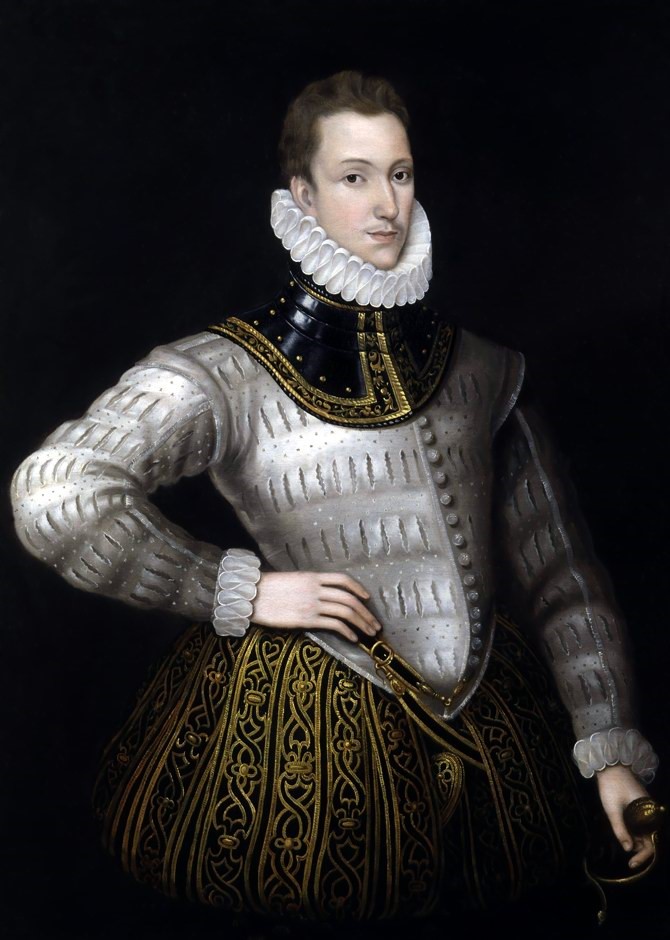
Fig. 31. Philip Sidney (1554-1586), poet and social activist of the
Elizabethan era. A copy made in the XVIII century from the original,
written by an unknown artist and attributable to 1578.
National Portrait Gallery, London

Figure 32. Portrait of a young man under a tree. A miniature brush by Isaac Oliver, allegedly depicting Philip Sidney. British Royal Collection
It was not possible to find out exactly when art critics finally agreed to consider the current name correct, but, apparently, it happened somewhere in the 70s of the last century: so, if in the article [Cummings] printed in 1968, fig. 1 is already called a portrait of Henry Percy, but still with some doubt (“Henry Percy, Ninth Earl of Northumberland (?), By Nicholas Hilliard. C.1594-98”), then by 1983 (the year of publication of the article [Strong]) This identification is already categorical.
All this mess with renaming once again testifies that the identification accepted in the modern literature depicted in fig. 1 young men with the 9th Earl of Northumberland, Henry Percy, who lived during the time of Queen Elizabeth Tudor – in general, no more than expected. And, by and large, it is based only on a few casual words, the validity of which is hardly possible to verify.
So who, it is asked, in fact, we see, looking at the presented in fig. 1 portrait? And why was he once related to Henry Percy? Of course, it is hardly possible to answer these questions precisely, but it is still possible to make a couple of assumptions.
On the one hand, it may well be so that the young man imprinted in the portrait is indeed a certain Henry Percy, but not “the same one”, but some later representative of this family. In this assumption, nothing is impossible, because, referring to the history of the Percy family, you can find out that the name Henry was very popular in him. For example, from the 14th to the middle of the 17th century, it was consistently worn by the 1st, 2nd, 3rd Barons Percy, and then the 1st, 2nd, 3rd, 4th, 5th 6th, 8th, and finally 9th Northumberland graphs, fig. 33-34 (the only “non-Henry” who worked on this slender row was the nephew of the 6th Earl who did not leave the heirs, whose name was Thomas).
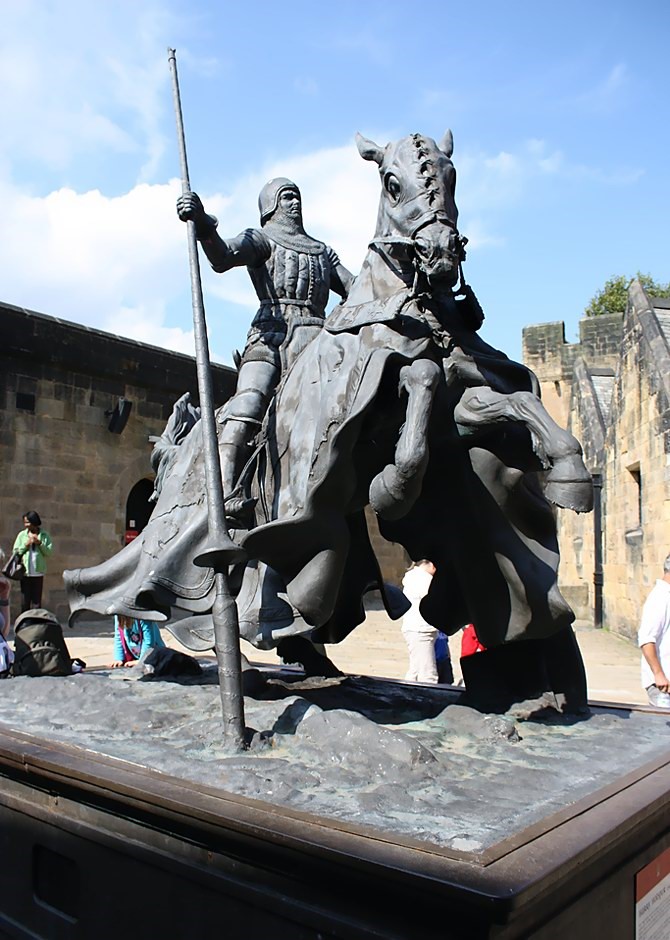
Fig. 33. Henry Percy, nicknamed “Hot Spur” (1364-1403), is a
knight and military leader under King Richard II and Henry IV.
The son of the 1st Earl of Northumberland (also Henry Percy).
The monument, installed in 2010 in the courtyard of the castle Alnnik, the
main residence of the dukes of Northumberland
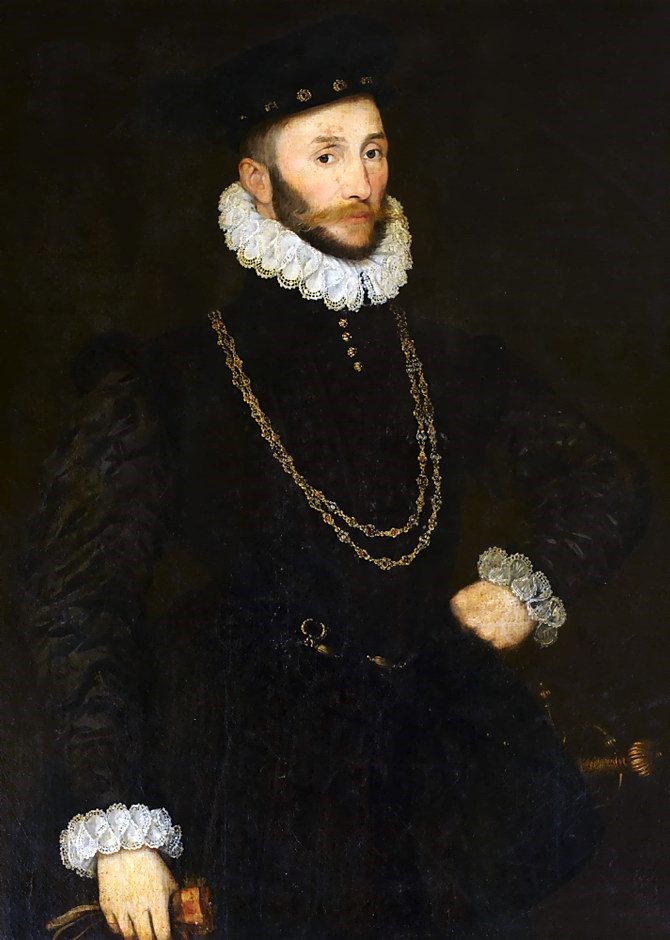
Fig. 34. Henry Percy, 8th Earl of Northumberland (1532-1585). Petworth Manor Art Gallery (West Sussex County)
At the same time, if we assume that the location of the planets encrypted in the portrait reflects not some current event, which gave rise to its writing, but indicates the moment of birth of the person depicted on it, then there is a possibility of more targeted verification of people born near the date obtained above. In this case, John Gilbert, Bishop of Salisbury and the Archbishop of York, who was born exactly on October 18, 1693, are immediately left among those who left their mark on history (although the biographical references did not indicate which calendar – Julian or Gregorian – This date is given, but, given that England switched to a new style only in 1752, most likely, it is the first that is meant), fig. 35
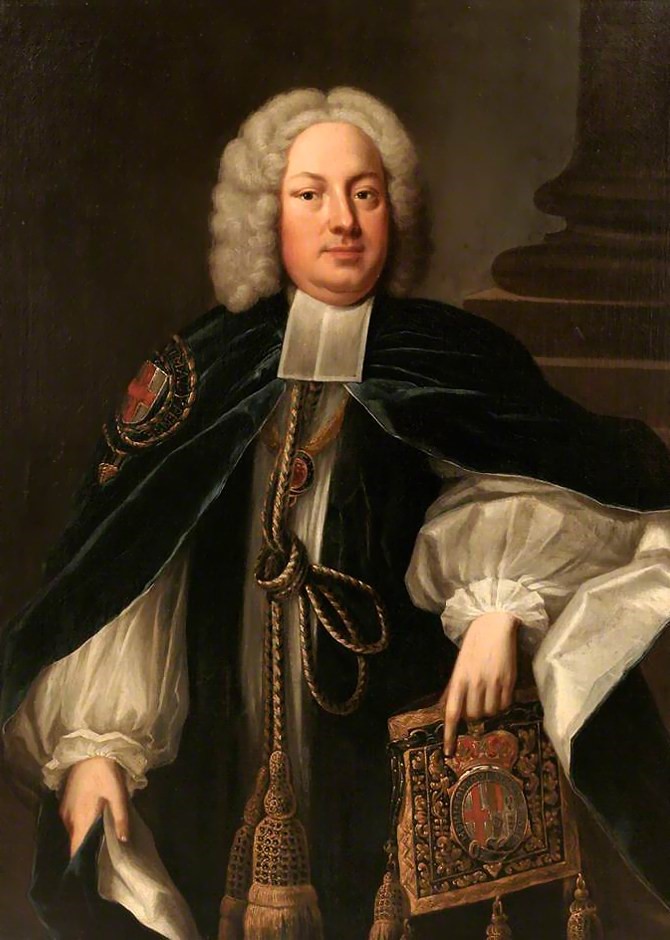
Fig. 35. John Gilbert, Archbishop of York (1693-1761).
Art Gallery of Mount Edgecomb Estate (Cornwall)
Certainly, with a more thorough search in this direction, other suitable candidates will also be found.
In conclusion, in fig. 36 shows a no doubtful portrait of Henry Percy; however, due to the significant difference in age with pic. 1 it cannot be used to visually compare facial features.
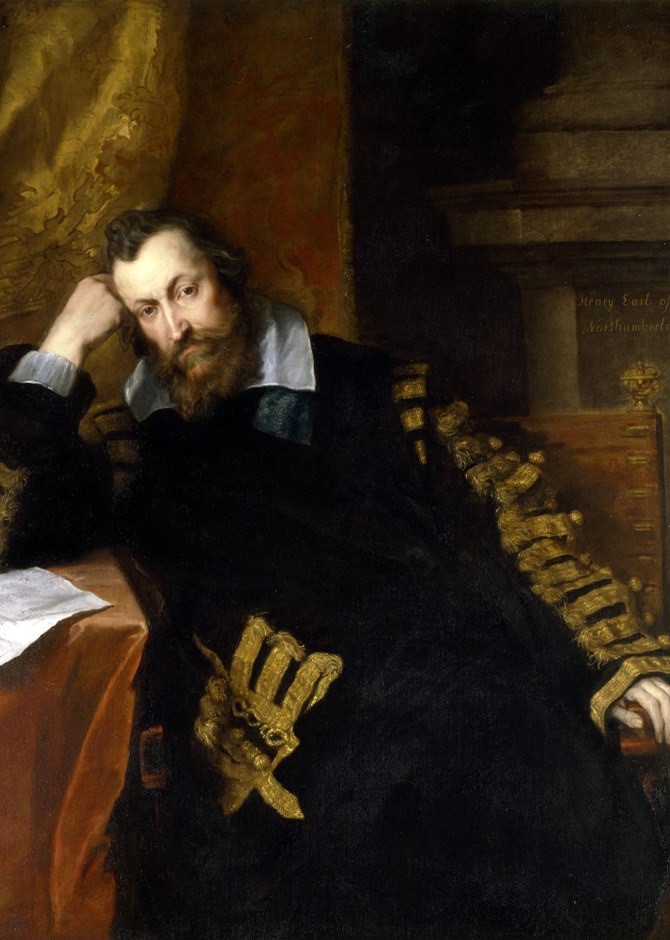
Fig. 36. A posthumous portrait of Henry Percy, commissioned by
his son Algernon Anthony van Dyck around 1641.
Right above the chair is the inscription: “Henry Earl of Northumberland”.
Petworth Manor Art Gallery
Another famous portrait of the same Henry Percy, dated 1602 year, that is, created, it is believed, almost at the same time as the figure. 1 , is shown in fig. 37, however, and looking at him, it is impossible to draw a conclusion about the identity of the people depicted.
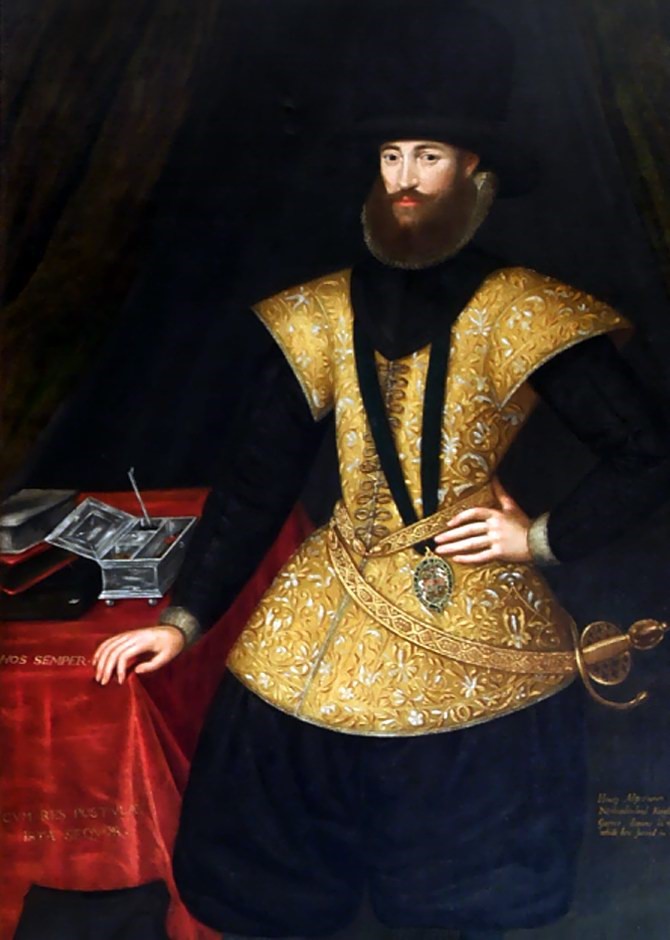
Fig. 37. Fragment of a portrait of Henry Percy, dated 1602 year.
On the table cloth you can read the slogan “HOS SEMPER CVM RES
POSTVLAT ISTA SEQVOR” (“I always do what circumstances dictate”).
Petworth Manor Art Gallery
Thus, we see that the decision of 1693, in principle, does not contradict anything that is more or less reliably known about the history of the picture in question. However, this does not mean that it is true.
- A complete enumeration of all the formally possible options for
decoding the horoscope and the analysis of the resulting results.
So, if we turn again to the preliminary solution found above — October 18 of the old style of 1693 AD — and take an unbiased look at it, then it is easy to see that, in addition to the already listed stretches, it has another obvious flaw. This is the way to get it. In fact, this solution was found based on the identification of two “marginal” trees in Fig. one simultaneously with the planets and with the constellation (Gemini). And although the fundamental admissibility of such an approach was sufficiently substantiated, it is nevertheless clear that it cannot be called standard. And therefore it makes sense to see what exactly it will be if we approach the decoding of the horoscope of interest from the most general positions. Will there be any new solutions, ideally without any exaggeration, consistent with the original image?
The logic, in this case, is as follows.
1) Two enclosed courtyards in fig. 1 are still identified with Scales and Scorpio, since this is their only reasonable interpretation, fig. 27 . Namely, the smaller courtyard denotes the constellation Libra (as from its fence a tree grows, on which the balance-Libra is suspended, Fig. 14 ), while the enclosing one is larger – the constellation of Scorpio.
2) Next, the four trees growing from the fence of a small courtyard are the four planets that are in Libra. And since on one of these trees a balancer with a lunar globe is suspended, fig. 5 , then one of these four planets is the moon. Thus, we find that the Moon must be in Libra and three more planets.
3) With regard to a separate tree with a saw cut in the foreground, in the preliminary solution found above it turned out to be consistent with Saturn, and this correspondence found a very good explanation, fig. 29 . Nevertheless, it is clear that, firstly, this explanation itself was received after the fact, and secondly, with almost the same degree of convincingness, a similar correspondence can be justified for any other (except for Mercury) planet ( it is big, like a saw; Mars – because it is just as reddish, Venus – because it is the brightest …).
However, if we proceed strictly from fig. 1 , then the line of reasoning will take the following form. Since the moon in fig. 1 is represented by a white (silver) disk (globe), then, from the point of view of the unity of the symbolic language, one should expect that in the same way – in the form of a bright yellow (or orange) disk – the Sun should also be indicated. And such a disk in Fig. 1 really is. This is the same bright orange saw cut on the trunk of the tree seen in the foreground. Therefore, this tree stands for the sun. And since it is located in a large courtyard, but outside of a small one, we can conclude that the Sun was in Scorpio.
By the way, if you mentally “return” the sawed “solar” branch (assuming it is straight), then it will rest on its end exactly into that branch of the neighboring tree on which the Moon is suspended. In addition, to some extent, solar symbols are additionally underlined by the fact that the trunk of the tree-Sun is noticeably thicker than the trunks of all the other trees depicted in the picture, which can obviously be regarded as a reference to the largest On the other hand, this nuance with equal probability may be the result of an ordinary perspective).
4) Finally, two trees beyond the fence of the large courtyard are two planets located outside the region bounded by the constellations Libra and Scorpio. At the same time, these planets should be in close proximity, since the trees corresponding to them are depicted underlined next to each other.
Actually, the four listed conditions are the basic set that any possible (more detailed) interpretation of the horoscope of interest to us must satisfy. And, guided by them, it is possible to carry out a preliminary formal screening of all those dates that obviously cannot be recorded in fig. 1 .
In addition, in addition to this basis, two sufficiently obvious conditions should be taken into account.
5) The fact that the moon globe is suspended on the bitch of the tree closest to the “sun-saw” of the tree, apparently, should indicate that the figure on the horoscope is recorded . 1 date The moon was the closest (among the four planets in Libra) to the Sun (which, as we already defined above, was in Scorpio). In other words, in the solution that we have to find, the Moon must be located somewhere near the Libra-Scorpion border.
6) Since the tree with a saw symbolizing the Sun is shown standing not only separately, but also as far as possible from the “lunar” four of trees, then this should almost certainly lead to the fact that the Sun was at a noticeable distance from the Moon and other planets that were in Libra . That is, it was somewhere in the middle of Scorpio, or even near its border with Sagittarius.
You can also add a couple of possible conditions to the six listed ones, which, however, are no longer reliable and may or may not correspond to the author’s intention.
7a) The fact that the two trees in the background are depicted, though outside the large courtyard, but close enough to it (visually: right behind the fence, may mean that the corresponding two planets were located near Libra. That is, they were in one of two the constellations closest to them are in Virgo or in Leo.
7b) On the other hand, if the word “TANTI,” meaning “equal,” written under a feather hanging on the “moon” balance, refers not only to the feather itself, but also to a pair of trees in the background, it can also indicate the fact that the corresponding pair of planets was located near one of the equinoxes — the spring (in Pisces) or the autumn (again in Virgo).
8) The image of four trees on the central line of fig. 1 evenly standing in a row can indicate that it is this way – more or less evenly extended in a line – they were located in the sky. That is, there was that very “parade of planets” that the author [Nesterov] wrote about.
As you can see, there is enough room for choice among possible combinations of four basic and from two to five additional conditions. In addition, it is necessary to take into account all permissible (for each specific combination of these conditions) permutations of a number of planets.
Since manual verification of each of the fundamentally acceptable decoding (with all the refinements) is very tedious (besides, some of these decrypts overlap each other, which leads to duplication of the same work), to facilitate the first – the most time-consuming – task stage, a small an auxiliary program, designed to sift in automatic mode all to a single date that would satisfy only the four most basic conditions from the basic set. Namely, it was required, first and secondly, that the five planets, including the Sun and the Moon, were in Libra or Scorpio, and the remaining two were outside this area. At the same time, thirdly, the Sun should have been strictly in Scorpio, and the Moon – strictly in Libra. Finally, fourthly, only those dates were taken on which the two “marginal” planets were located at a distance from each other. not exceeding 10 degrees of arc (value taken with a significant margin). As a result, this program issued eight solutions located in the interval from 1550 (that is, shortly before 1564, considered the year of birth of Henry Percy) and until 2000 AD
Here is a complete list of them (all dates are given in the old style):
1) 1686, November 4-5;
2) 1780, November 13-14;
3) 1782, November 21-22;
4) 1801, November 21-22;
5) 1836, November 23-25;
6) 1865, December 1-3;
7) 1875, November 13-15;
8) 1940, November 14-15.
Immediately, attention is drawn to the fact that among these decisions there was not a single one that fell into the years of Henry Percy’s life (1564-1632) given by Scaligerian history, and only one that lay before 1730 and therefore could be relatively painlessly coordinated with it (since , as we already know, the first reference to the picture in question belongs to 1728).
However, this is only a preliminary list. Let us examine it in more detail, paying attention to the compliance of at least two of the most important additional conditions formulated above. Namely, we will check whether the Moon located in Libra was the closest to the Sun, and whether the Sun was the only planet in Scorpio.
1) Let’s start with the decision of November 4-5, Art. Art. 1686:
This decision, as can be seen from the table, immediately contradicts both additional conditions. First, the planet nearest to the Sun was not the Moon, but Mercury, and, secondly, in Scorpio, besides the Sun, there was also Jupiter.
This means that the decision of 1686 must be rejected.
Go to the next for him in the list.
2) Decision November 13-14, Art. Art. 1780 (in the tables below, the positions of the planets are given on one date , most closely corresponding to Fig. 1 , the date on which the Moon was closest to the Sun):
This decision again contradicts additional conditions, since there were only two planets in the Scales (the Moon and Jupiter), whereas in Scorpio there were three at once (the Sun, Saturn and Mercury).
Therefore, the decision of 1780 must also be rejected.
3) Decision of November 21-22, Art. Art. 1782 years:
Again, this decision should be discarded, and for exactly the same reasons as the previous ones. Namely, in Scorpio there were two planets (Venus and the Sun) instead of the required one.
4) Decision of November 21-22, Art. Art. 1801:
Formally, this solution looks very good. A pair of trees in the background in it are Saturn and Jupiter, located in the middle of Leo at a distance from each other only 1.9 degrees of arc. Four trees on the center line (in order of approaching the viewer) – Venus, Moon, Mercury, and Mars located in Libra. Finally, the Sun, which was located in Scorpio, at a noticeable distance from the previous four, corresponds to a separate tree on the left.
However, full compliance with Fig. 1 is not there, because the Moon was not in direct proximity to the Sun, since Mercury (which, however, can be neglected) and Mars were closer to it. And accounting for the fastest among all the planets of the Moon’s movement does not change anything, since by the time the Moon overtook Mars and took its place as the visible planet closest to the Sun, it had already disappeared from view.
Nevertheless, of the four solutions already considered, this is undoubtedly the best, and therefore, for clarity, in fig. 38 is an illustration showing the location of the planets on the corresponding date.
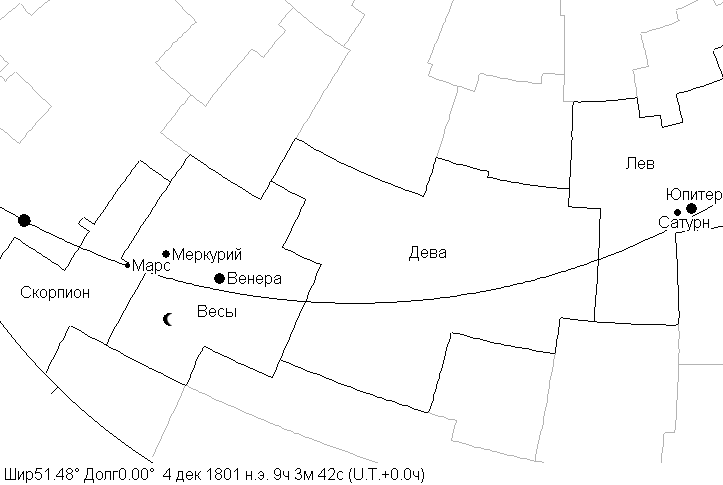
Fig. 38. The position of the planets on November 22 st. Art. (December 4 n. Art.) 1801 AD
The observation point is London. Based on the screen of the program StarCalc
However, we still have four more solutions. Check them now.
5) Decision of November 23-25, Art. Art. 1836:
In this decision again, instead of four planets in Libra and one (Sun) in Scorpio, we immediately see two planets (Mercury and the Sun) in Scorpio and only three in Libra. Consequently, this solution is not suitable.
6) Decision 1-3 December Art. Art. 1865:
It is still worse here, and, as in 1780, there were only two planets (Moon and Saturn) instead of four planets in Libra, while three were in Scorpio (Venus, Mars and the Sun) instead of one. It means that this decision is no good.
7) Decision of November 13-15, Art. Art. 1875:
This decision is bad because once again in Scorpio, in addition to the Sun, there appeared another planet (Venus). Therefore, it can not be considered satisfactory rice. 1 .
8) Decision of November 14-15, Art. Art. 1940:
Unlike all previous ones, this solution – or rather the second of its component dates, the data for which are given in the table above, that is, on November 15 of the old style of 1940 – turns out to be ideally corresponding to fig. 1 .
In fact, as shown in Fig. 1 , four planets – in order of approaching the viewer: Venus, Mars, Mercury and the Moon – gathered in Libra, and the Sun – in Scorpio. In this case, the moon was almost on the border with Scorpio and was closest to the sun. In turn, the Sun, exactly as shown in fig. 1 , was at a considerable distance from the moon (and, especially, the rest of the three planets located in Libra). Thus, both of the most important additional conditions are fully met.
As for the remaining two planets shown in Fig. 1 two “marginal trees”, they were Saturn and Jupiter, located in Aries (that is, near the vernal equinox, so that at least one of the optional conditions is also fulfilled) at a distance of exactly two degrees from each other arc.
In conclusion, in fig. 39 is a vivid illustration showing the location of the “inner-graded” planets in the 1940 decision.
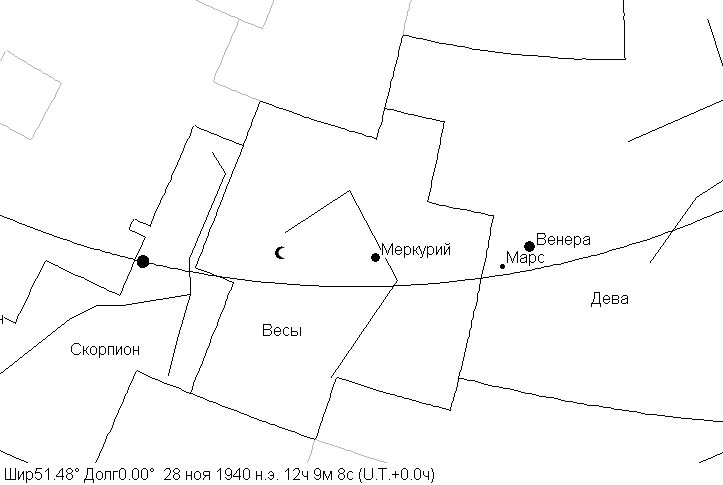
Fig. 39. The position of the Sun, Moon, Mercury, Mars and Venus
November 15, Art. Art. (November 28, N. Art.) 1940 AD. The
observation point is London. Based on the screen of the program StarCalc
To Be Continued…
 Hidden History Research