
O horror, horror, horror!
Tongue nor heart cannot conceive nor name thee!…
Confusion now hath made his masterpiece.
Most sacrilegious murder hath broke ope
The Lord’s anointed temple, and stole thence
The life o’ th’ building!
MacDuff
Macduff is the archetype of the avenging hero, not simply out for revenge but with a good and holy purpose. Macduff is the character who has two of the most significant roles in the play: First, he is the discoverer of Duncan’s body. Second, the news of the callous murder of his wife and children (Act IV, Scene 3) spurs him toward his desire to take personal revenge upon the tyrannical Macbeth. When he knocks at the gate of Macbeth’s castle in Act II, Scene 3, he is being equated with the figure of Christ, who before his final ascension into Heaven, goes down to release the souls of the damned from hell (the so-called “Harrowing of Hell”).
Like Macbeth, Macduff is also shown as a human being. When he hears of the death of his “pretty chickens,” he has to hold back his emotions. Even when (in Act IV, Scene 3) Malcolm urges him to “Dispute it like a man,” Macduff’s reply “I will do so. But I must also feel it as a man” enables the audience to weigh him against Macbeth, an unfeeling man if ever there was one. In the final combat between hero and anti-hero, this humanity is recalled once more when Macduff cries out, “I have no words; my voice is in my sword.” It is his very wordlessness that contrasts with Macbeth’s empty rhetoric.
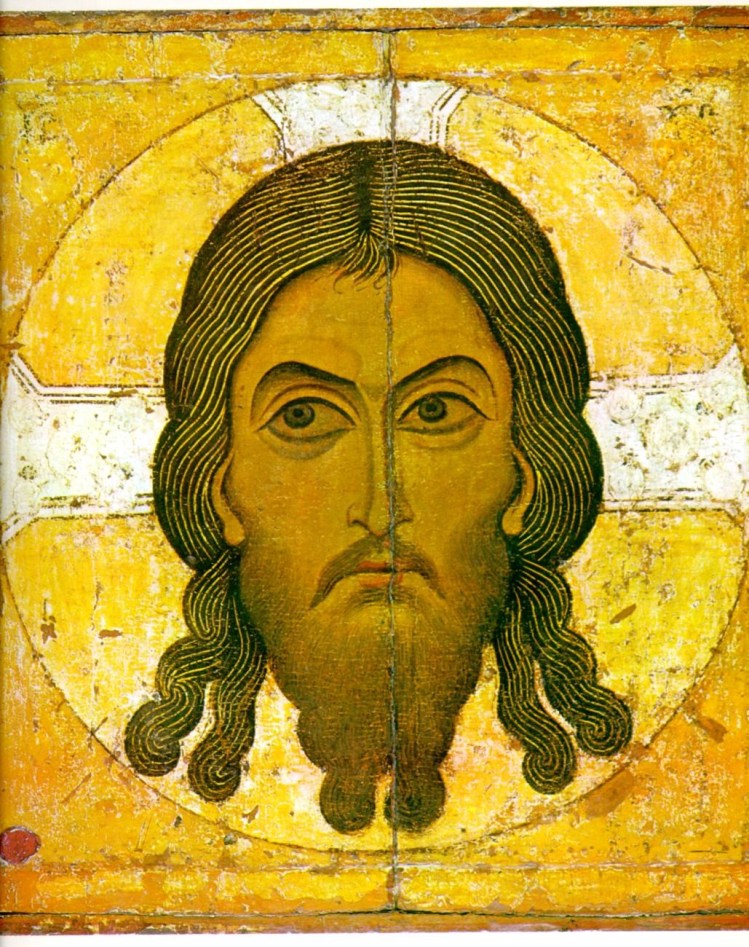
Jesus Christ
Andronicus I Comnenus – Nikitas Choniates, 12th century Byzantine writer:
Thus the wretched Andronicus was arrested, bound, and thrown into a boat together with the women…
He was confined in the so-called prison of Anemas with two heavy chains weighing down his proud neck, the iron collar used to fetter caged lions, and his feet were painfully shackled. Bound in this fashion he was paraded before Emperor Isaakios (Isaac II Angelos – his cousin)…
He was slapped in the face, kicked on the buttocks…his teeth pulled out…he was even battered by women who struck him in the mouth with their fists…
Afterwards his right hand was cut off by an axe, he was cast again into the same prison without food and drink, tended by no one.
…one of his eyes was gouged out, and seated upon a mangy camel, he was paraded through the agora.
…there was no evil which they did not inflict wickedly on Andronikus. Some struck him on the head with clubs…some using foul language reviled his mother and all their forebears. There were those who pierced his ribs with spits…pelted him with stones…
There was no one who did not inflict some injury on Andronikus.
To those who poured forth one after another and struck him, he turned and said no more than, ‘Lord have mercy,’
Removing the short tunic they assaulted his genitals. A certain ungodly man dipped his long sword into his entrails by way of the pharynx…
…raised their swords with both hands…they brought them down, making trial as to whose cut was deepest.
After so much suffering, Andronikus broke the thread of life, his right arm extended in agony and brought around to his mouth so that it seemed to many that he was sucking out the still warm blood dripping from the recent amputation.
Macbeth is a story of Divine Retribution in action.
“What’s done cannot be undone.”
“To-morrow, and to-morrow, and to-morrow,
Creeps in this petty pace from day to day,
To the last syllable of recorded time;
And all our yesterdays have lighted fools
The way to dusty death. Out, out, brief candle!
Life’s but a walking shadow, a poor player,
That struts and frets his hour upon the stage,
And then is heard no more. It is a tale
Told by an idiot, full of sound and fury,
Signifying nothing.”
“Screw your courage to the sticking-place”
 Hidden History Research
One thought on ““O horror, horror, horror!””