We have had The Mabinogi: Branwen ferch Llŷr. Geoffrey of Monmouth. Raphael Holinshed. Shakespeare.
All these are the story of an old King and his three children.
But whose story is it?
If I’ve learned anything about this Hidden History stuff, it’s that genders are as fluid as timelines. (Oh. There’s a deeper modern day meaning there!)
King Lear
An ageing ruler, worried about the future, chooses his heir(s) with a question.
“Since now we will divest us both of rule,
Interest of territory, cares of state,–
Which of you shall we say doth love us most?”
He gets three answers:
“Sir, I love you more than word can wield the matter;
Dearer than eyesight, space, and liberty;
Beyond what can be valu’d, rich or rare;
No less than life, with grace, health, beauty, honour;
As much as child e’er lov’d, or father found;
A love that makes breath poor and speech unable;
Beyond all manner of so much I love you.”
Goneril
“Sir, I am made of the self mettle as my sister,
And prize me at her worth. In my true heart
I find she names my very deed of love;
Only she comes too short, that I profess
Myself an enemy to all other joys
Which the most precious square of sense possesses,
And find I am alone felicitate
In your dear highness’ love.”
Regan
“Unhappy that I am, I cannot heave
My heart into my mouth: I love your majesty
According to my bond; no more nor less.”
Cordelia
Let’s change the time, the place and all the names.
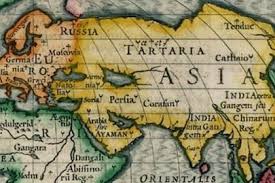
Ancient Britain is 16th century Russia.
Lear is Ivan IV Vasilyevich otherwise known as Basil the Blessed and Simeon Bekbulatovich.
Goneril is Elena of Moldavia.
Regan is Ivan Ivanovich/Ivan the Young. (Literary Gender-bending?)
Cordelia is Zoe Palaiologina.
The Fool is Parthenius…the pseudonym Ivan IV Vasilyevich used. (That’s why the Fool is always with Lear. One and the same person.)
The plot line has been discussed here already. Oprichnina. Livonion War. Katherine of Aragon. Anne Boleyn. The Romanov Reformation.
The whole play is a reflection of the beginning of the end of the Great Empire.
It would take another century and more for the Reformers to win. By the end of the 18thc/beginning of the 19thc, the new order had finally won.
Tartary was no more and history changed.
What goes around, comes around?
“Tis the times’ plague, when madmen lead the blind.”
King Lear
 Hidden History Research