“Here we go ‘round the history books.”
In no particular order
7th May 2019 – Brutus of Troy post
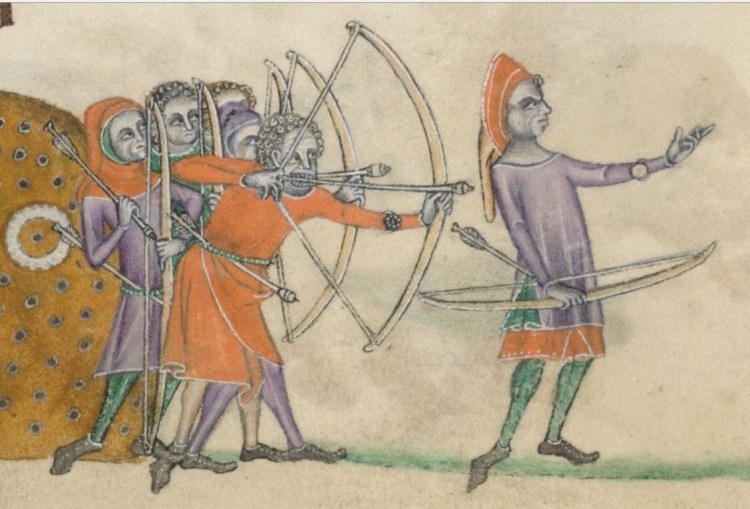
Geoffrey then follows with the story of the founding of this country over 3,000 years ago by Brutus, the (great) grandson of Aeneas of Troy. It was prophesied, by soothsayers, that Brutus would cause the death of both his father and his mother. His mother died in childbirth, his father, Silvius, got in the way of another one of those pesky arrows – this one having been shot by his son, Brutus.
Harold Godwinson, King of England
The notion that Harold died by an arrow to the eye is a popular belief today, but this historical legend is subject to much scholarly debate. A Norman account of the battle, Carmen de Hastingae Proelio (“Song of the Battle of Hastings”), said to have been written shortly after the battle by Guy, Bishop of Amiens, says that Harold was killed by four knights, probably including Duke William, and his body dismembered. Twelfth-century Anglo-Norman histories, such as William of Malmesbury’s Gesta Regum Anglorum and Henry of Huntingdon’s Historia Anglorum recount that Harold died by an arrow wound to his head. An earlier source, Amatus of Montecassino’s L’Ystoire de li Normant (“History of the Normans”), written only twenty years after the battle of Hastings, contains a report of Harold being shot in the eye with an arrow, but this may be an early fourteenth-century addition. Later accounts reflect one or both of these two versions.
William Rufus King of England
William went hunting on 2 August 1100 in the New Forest, probably near Brockenhurst, and was killed by an arrow through the lung, though the circumstances remain unclear. The earliest statement of the event was in the Anglo-Saxon Chronicle, which noted that the king was “shot by an arrow by one of his own men.” Later chroniclers added the name of the killer, a nobleman named Walter Tirel, although the description of events was later embroidered with other details that may or may not be true. The first mention of any location more exact than the New Forest comes from John Leland, who wrote in 1530 that William died at Thorougham, a place name that is no longer used, but that probably referred to a location on what is now Park Farm on the Beaulieu estates.
The king’s body was abandoned by the nobles at the place where he fell. A peasant later found it. William’s younger brother, Henry, hastened to Winchester to secure the royal treasury, then to London, where he was crowned within days, before either archbishop could arrive. William of Malmesbury, in his account of William’s death, stated that the body was taken to Winchester Cathedral by a few countrymen
Hugh de Montgomery, 2nd Earl of Shrewsbury
On or about 31 July 1098 Hugh was killed while fighting against a raid by King Magnus Barefoot of Norway at Anglesey, being shot dead by an arrow and falling into the sea. Among those in Magnus’ party were Harold Haroldson, son of Harold Godwinson King of England. Several sources agree that it was Magnus himself who shot the arrow hitting Hugh through the eye slit in his armour while the earl was riding carelessly through the shallows.
Magnus Barelegs
On 5 August 1103, Muirchertach unsuccessfully tried to subdue Domnall in the Battle of Mag Coba. Magnus did not take part, but his Dublin subjects fought with Muirchertach. Since Magnus was closing in on the Irish throne, Muirchertach may have wanted him out of the way. According to Morkinskinna and Heimskringla, the two agreed that Muirchertach was to bring Magnus and his men cattle provisions for their return to Norway; as this dragged on past the agreed time, Magnus became suspicious that the Irish planned an attack. He gathered his men on St. Bartholomew’s Day (!!!!) (or the day before, according to Ágrip), 24 August 1103, and ventured into the country. It is possible that Magnus and his men made an incautious landing to raid cattle, or the Ulaid mistook the Norwegians for cattle-raiding Hebrideans. Alternatively, Muirchertach may have ordered the Ulaid to bring provisions to Magnus, inciting the Ulaid to ambush the Norwegians.
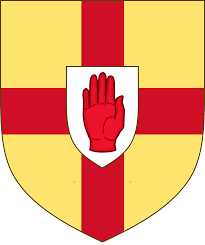
Norse sources describe a large force emerging from hiding places in an ambush. The Norwegian forces were taken by surprise, and were not in battle order. Magnus attempted to assert control over his disordered army, ordering part of his force to seize secure ground and use archery fire to slow the Irish. In the melee Magnus was pierced by a spear through both thighs above the knees but he fought on, attempting to get his men back to the level campsite. An axe-wielding Irishman charged him, striking a lethal blow to his neck. When his men said that he proceeded incautiously in his campaigns, Magnus is reported to have responded “Kings are made for honour, not for long life”; he was the last Norwegian king to fall in battle abroad.
Perhaps betrayed by Muirchertach, Magnus may also have been betrayed by his own men (in particular the contingent of nobleman Torgrim Skinnluve from the Uplands, who fled to the ships during the battle). It is possible that Torgrim and his men may have been directed by powerful men in Norway, who wanted Magnus removed from the Norwegian throne. More Irishmen than Norwegians fell in the battle, according to Snorri Sturluson, and Magnus’ reign could have been different if Torgrim and his men had fought as directed. Magnus’ son Sigurd returned to Norway without his child bride after his father’s defeat, and direct Norwegian control in the region came to an end. Although Norwegian influence remained, no Norwegian king returned for more than 150 years
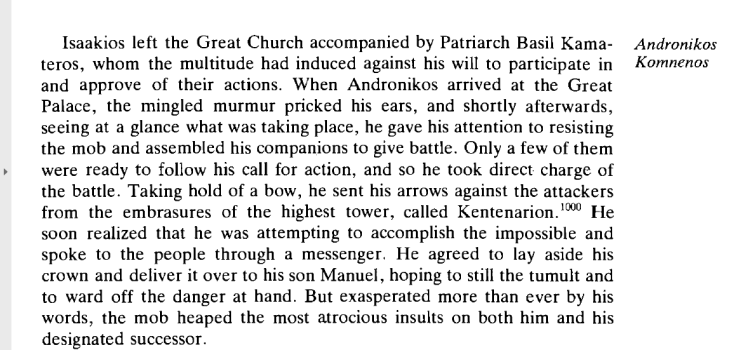
Andronicus I Comnenus by Niketas Choniates
Titus Andronicus
| [Titus Andronicus gives them the arrows] | ||
| ‘Ad Jovem,’ that’s for you: here, ‘Ad Apollinem:’ | ||
| ‘Ad Martem,’ that’s for myself: | ||
| Here, boy, to Pallas: here, to Mercury: | 55 | |
| To Saturn, Caius, not to Saturnine; | ||
| You were as good to shoot against the wind. | ||
| To it, boy! Marcus, loose when I bid. | ||
| Of my word, I have written to effect; | ||
| There’s not a god left unsolicited. | 60 | |
| MARCUS ANDRONICUS | Kinsmen, shoot all your shafts into the court: | |
| We will afflict the emperor in his pride. | ||
| TITUS ANDRONICUS | Now, masters, draw. | |
| [They shoot] | ||
And the punchline from NC.
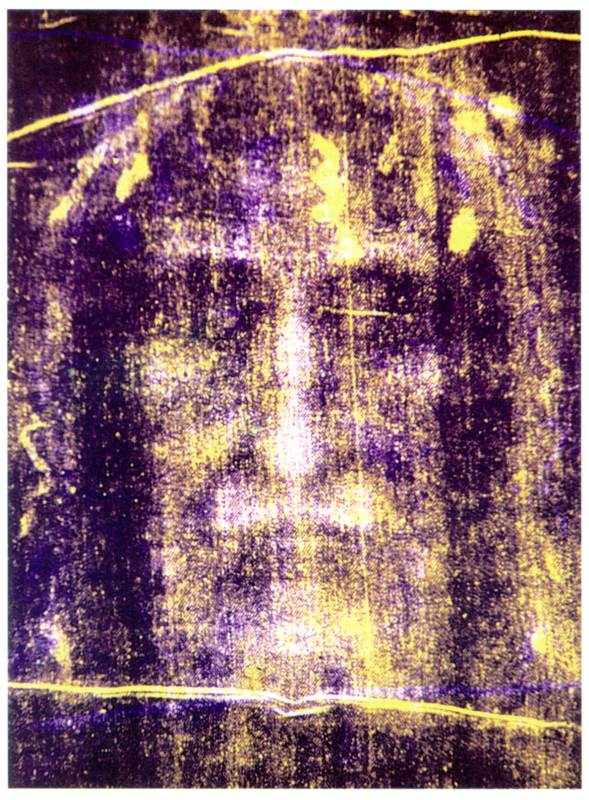
ANDRONICUS’ BLINDED EYE AND CHRIST’S DAMAGED EYE ON THE SHROUD.
According to Choniates’ writing, prior to his execution they PUT OUT THE LEFT EYE OF Andronicus. ‘A few days later they poked out his left eye, put him on a mangy camel and triumphantly lead him around the square’ [140], p.357. There is nothing said about it in the Gospels, but it can be seen in the Shroud that one of Christ’s eyes was damaged and most likely, poked out, see above. This factor drew the attention of various scholars. In the photograph of the Shroud you can very well see a large vertical wound across the right eye. Choniates writes about the left eye, but not about the right eye, but we should not forget about the fact, that Choniates’ narration is by no means an original. As we have seen it is some kind of compilation of the old sources made by a more recent editor. Besides, the documents themselves apparently also appeared as a result of multiple re-writes. As we understand it now the story of Christ was indeed very ancient. The twelfth century is deep antiquity according to the new chronology. We cannot expect the complete matching in the accounts in every detail. Nevertheless, the fundamental aspects of the events, as we are finding out, survived quite well. In this case – the blinded eye.
Let us also remember that in Choniates’ version Andronicus was compared to the CYCLOPS [140], p.279. To remind you – Cyclops are the ‘GIANTS WITH ONE EYE in their forehead, they are noted for remarkable strength’ [154].Besides, the cyclopes ‘belong to the MOST ANCIENT GENERATION OF GODS’ [95], v.1, p.649.
There emerges an impression, that Choniates calls Andronicus CYCLOPES by no means accidentally. Most likely the mythological Cyclopes is Christ, whom before his death was blinded in one eye. Christ was tall. Subsequently rumour built upon this fact created a mighty one eyed giant – Cyclopes.
 Hidden History Research