
NC (in the excerpt below) makes this V.I.H.P.
Basically – the damage had Already been done before they decided to play jiggery pokery with Chinese history.
It makes sense to me :o)
The landmarks of the parallelism between the Chinese and the phantom European history
before the X century A. D.
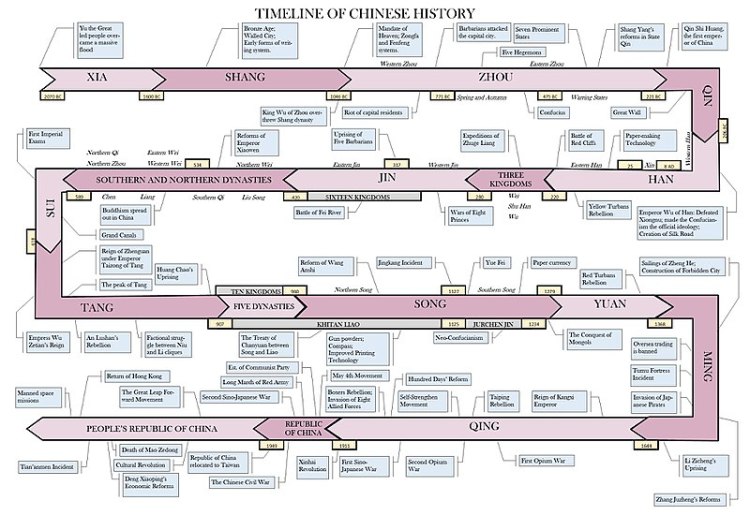
We haven’t analysed the Chinese history before the X century A. D. in detail. However, even a very perfunctory study of the chronological table of Chinese history between the beginning of the new era and the X century A. D. (as cited in [215], for instance) leads one to the assumption that there might be a parallelism between Chinese and phantom Roman history of the epoch in question.
- A. Morozov may have been correct when he wrote: “I would like to give a well-wishing recommendation to all those who use the Shang Dung or Beijing pronunciation when they interpret the Chinese hieroglyphs referring to the names of people and places, thus making the narration void of all obvious meaning . . . In your attempt to make the ancient documents found in Eastern Asia, which may have come there from Europe in many cases, look pseudo-scientific and authentically Chinese, you involuntarily deceive yourselves as well as others” ([544], page 63).
Pay close attention to the fact that the superimposition of Chinese and European history as discussed below does not contain any chronological shifts. Basically, European history simply became transplanted to the Chinese soil without any alterations of dates – the distortions only affected the names and the geography.
Furthermore, it is extremely important that the parallelism in question identifies Chinese history as the history of Rome in its Scaligerian version, or the very version of European history that already became extended due to the errors made in the XIV-XVII century by M. Vlastar, J. Scaliger and D. Petavius.
This instantly implies that the foundation of the “ancient Chinese” history was already based on the distorted version of chronology, which couldn’t have been created earlier than the XVI–XVII century; therefore, history of China as known to us today cannot predate this epoch.
Incidentally, this is in good correspondence with N. A. Morozov’s hypothesis, which suggests that the European chronicles that served as the foundation of the “ancient Chinese history” were brought to China by Catholic missionaries in the XVII century.
 Hidden History Research