For centuries everyone knew the Labour of Months. Even those who did not work the land. This was as common as common knowledge can get and depicted in art everywhere.
- January — Feasting; exchanging gifts on New Year’s. Often there’s an allusion to Janus, the god of doors, with two or three heads facing in different directions, much the way January sits between the old year and the new. Watch for a man feasting at table with two chalices or goblets in front of him.
- February — Sitting by the fire, digging, plowing, and pruning
- March — Pruning trees, or digging
- April — Planting, enjoying the country or picking flowers
- May — Hawking, Maying, courting
- June — Haying, weeding, sheep-shearing
- July — Wheat harvesting
- August — Threshing wheat
- September — Grape harvesting
- October — Ploughing or sowing; in wine country, putting the wine in barrels for aging.
- November — Gathering acorns for pigs
- December — Hog butchering, the boar hunt, bread baking
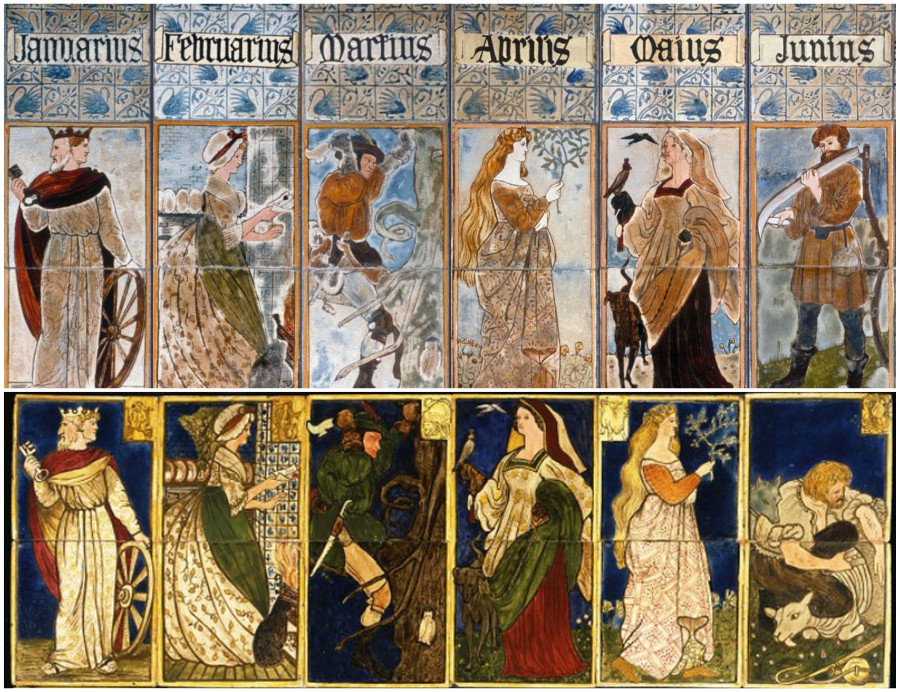
Even in the 19th/20th century, William Morris used the Labours in several of his works such as the glorious tiles below.
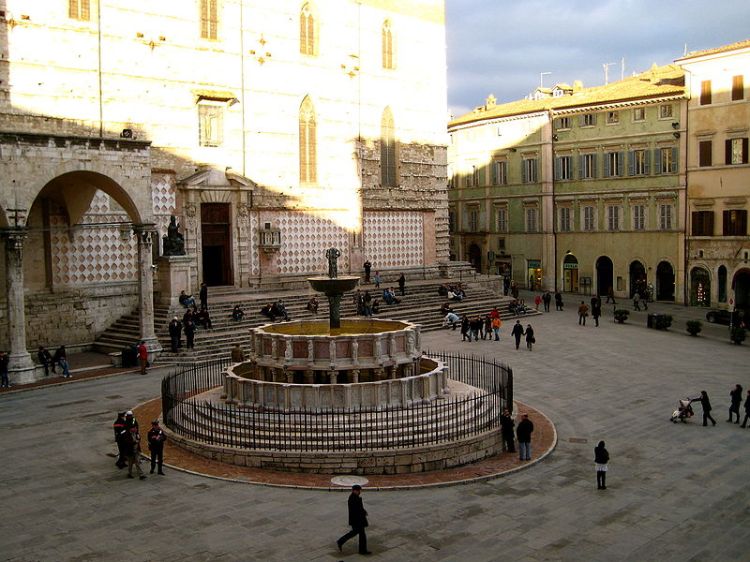
But a truly fascinating work of art showing this knowledge in plain sight stands in Perugia, Italy.
It’s called the Fontana Maggiore.
My thanks to Darrelyn Gunzburg – University of Wales Trinity Saint David for the following paper.
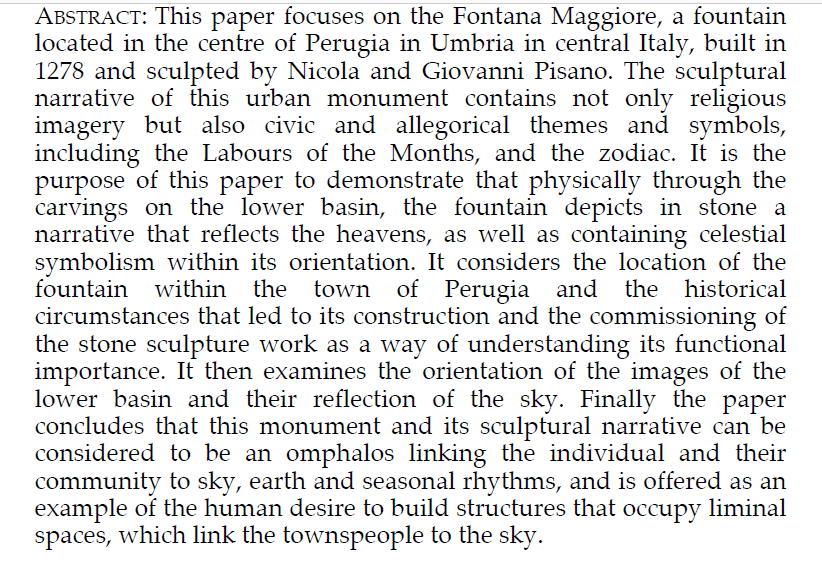
Needless to say : I will return to this fountain and it’s properties at a later date.
Always with the TWELVE, yes?
 Hidden History Research