Borrowed from Frenchgrimoire, a variant of grammaire,[1] from Old Frenchgramaire (“grammar; grimoire; conjurer, magician”), from Latingrammatica (“grammar; philology”), from grammaticus (“of or pertaining to grammar, grammatical”), from Ancient Greekγρᾰμμᾰτῐκός (grammatikós, “knowing one’s letters; concerned with textual criticism”), from γράμμα (grámma, “that which is drawn or written; letter; book, writing”) + -ῐκός (-ikós, suffix added to noun stems to form adjectives). γράμμα is derived from γρᾰ́φω (gráphō, “to cut into, scratch; to draw, paint; to write”) (ultimately from Proto-Indo-European*gerbʰ- (“to carve”)) + -μᾰ (-ma, suffix added to verbal stems forming neuter nouns denoting the result of, a particular instance of, or the object of an action). The English word is a doublet of glamour, grammatic and grammar.
Well. FACTS According to Wiki.
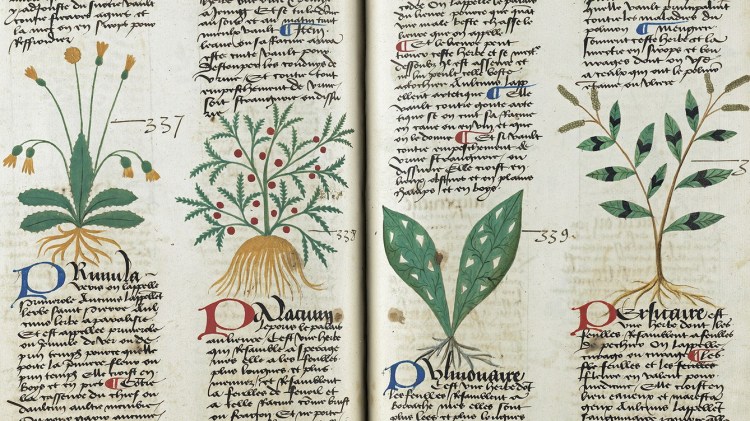
In MY World a GRIMOIRE is a hand-written Herbal Book.
Such as was once kept by the Lady of the House or the Wise Woman down the lane.
And yes – it contained secrets and occult (hidden) knowledge. But it was NEVER a book used to summon up evil spirits. That is Blatantly FAKE History.
Much like TAROT, which uses images and words, the herbal was re-named The Devil’s Picture Book.
A HERBAL was the centuries old equivalent of today’s local doctor or pharmacy.
A plant grew. A tincture or poultice or meal was made from it. People regained health.
Well. Empirically…a few might have died. Hence the knowledge of poisons. A Learning Curve ?
P.S. And not a single person answered my question a while back about how some survived the “punishment by eating the deadly poison seed.”
M’eh :o)
 Hidden History Research