“Run from what’s comfortable. Forget safety. Live where you fear to live. Destroy your reputation. Be notorious. I have tried prudent planning long enough. From now on I’ll be mad.”
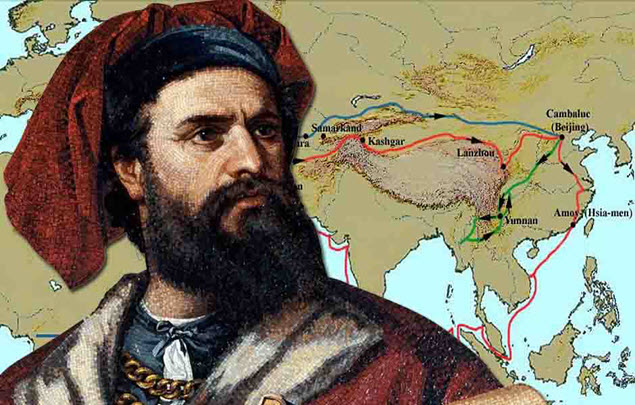
From NC…..The Colour of the Kingdom 1. INTRODUCTION. WHO IS MARCO POLO? What is actually described in the famous book by Marco Polo? The reader may say wearily: again – Ancient Russia. The answer is: not only Russia – indeed described by Marco Polo under the names of Tataria, India and China – but also some other countries […]
The ruins of Bolingbroke Castle is a handful of miles away. I’ve visited often and used to sit on the stones there, daydreaming! Local legend says that it was destroyed by Oliver Cromwell in the 17th C – the site of the Battle of Winceby is close by. Bolingbroke was the birthplace of […]
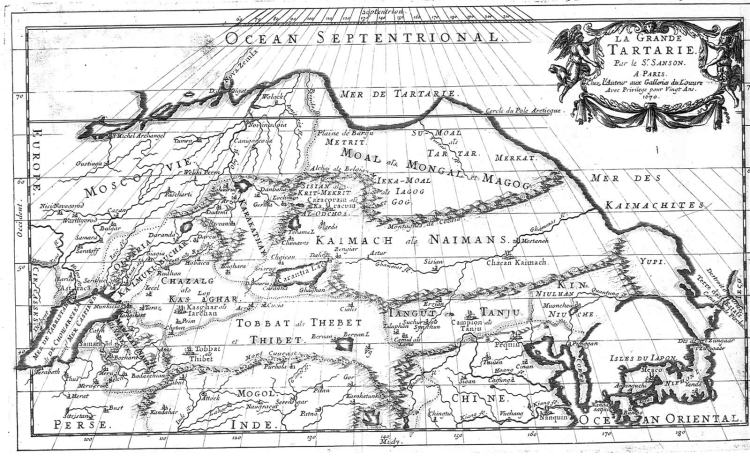
Source – New Chronology via Googlation The map is extremely interesting and well meets our reconstruction. To begin with, the map is called the Great Tataria, that is, MONGOLO-TATARIA. Because the word “Mongol” means “great.” According to the map, the Great Tataria included not only the Russian Empire, in the modern sense of the word, but […]
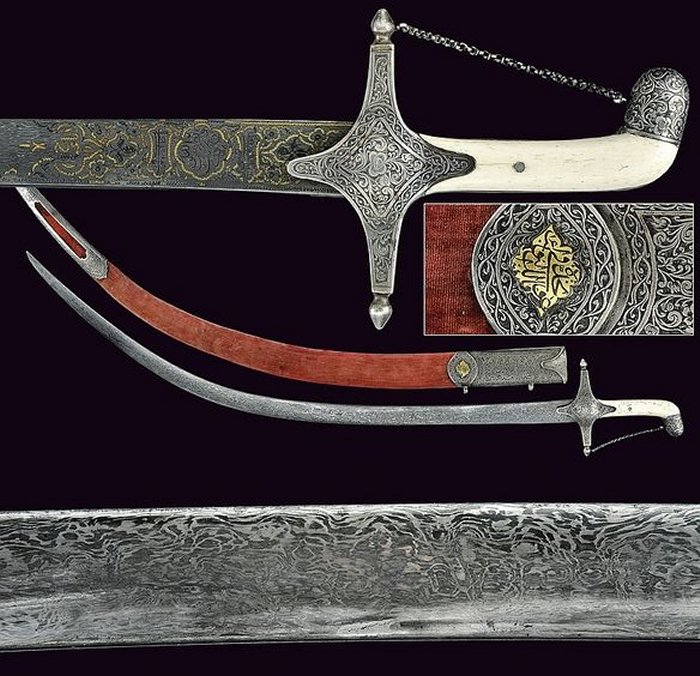
Original Damascus Steel is beautiful and coveted, supposedly ancient and legendary and now a lost knowledge. It’s manufacture is strongly linked with Syria (it’s in the name!) but did you know that the Cossacks were famous for their Damascus Steel swords, sabres, shields and chain-mail armour? The Cossacks had a fearsome reputation. Their weapons could […]
The original for this is Jordan Tabov: The Decline of Old Bulgaria. But I can’t find it yet. Anyhoo – How did our Ancestors Read and Write? Left to right? Right to left? Within a straight ruled line? For your consideration….
A chronological revolution made by historical analytics By Eugen Gabowitsch (Potsdam, Germany) Knowledge of our history timeline is important, and not only for historians. If indeed the dates of antiquity are incorrect, there could be profound implications for our beliefs about the past, and also for science. Historical knowledge is important to better understand our […]
Not all RESETS were huge, physical catastrophes. Some were much more subtle. And insidious – “gradually and secretly causing harm.” The last two posts about language were necessary because, to my mind, one of the greatest, invisible manipulations has been the LANGUAGE RESET. This is a subject that I intend to cover in depth (when […]
“Consonantal writing systems, as the name implies, represent the consonantal value of a syllable while ignoring the vocalic element. Such a system, therefore, would represent the syllables pa, pe, pi, po, pu with a single character. Such scripts have graphs for consonant sounds but not for vowel sounds, with the result that a certain amount of guesswork is involved in determining […]
I’m finished with the Brutus’s’s’s (Bruti?) for the mo’ But he will come back later. Along with Julius Caesar, Mark Anthony and Cleopatra. The next part of the True History of the British Isles will have Nothing to do with Britain, per se. And…. It still won’t make sense. Hey. Whatever. It’s all a […]
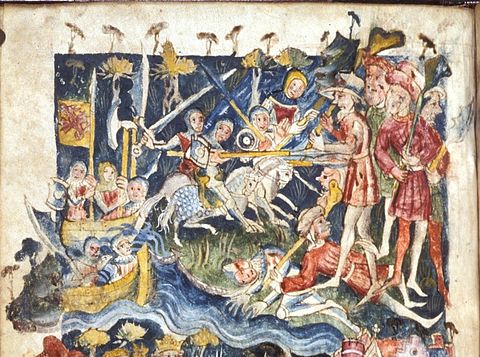
Let’s return to 3,000 years B.C. and Brutus the Trojan as written by Geoffrey of Monmouth. “The island was then called Albion, and inhabited by none but a few giants. Notwithstanding this, the pleasant situation of the places, the plenty of rivers abounding with fish, and the engaging prospect of its woods, made Brutus and his […]
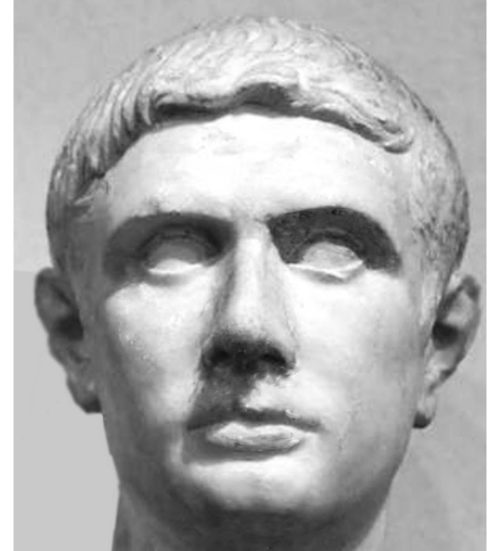
What if… Britain was not named for Brutus the Trojan (3,000 years ago) but Brutus the Roman Consul ? (2,000 years ago) Did some of the old English chroniclers pick the wrong man? Nennius cites the Roman Brutus who came to Britain with his adopted father, friend and mentor Julius Caesar in the 1st century […]




 Hidden History Research