
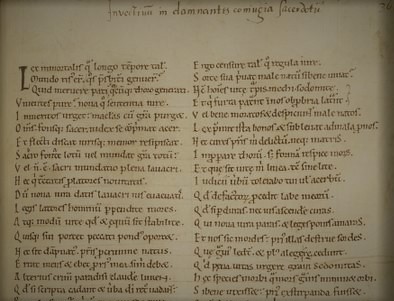
During my research this week I stumbled across an article written in 1933 called The First English Poetess.
It was a strange piece, only 4 pages, and giving away very little. Apart from the fact that, in the late 11th and early 12th century, there lived a female poet of great renown. She was called -maybe- Murier (which means Mulberry) or Muriel which is an uncommon but not unknown Norman name. She was connected – maybe- with Wilton and she was much admired by Serlo of Bayeux.
From such confusion grows a great need to find out the truth.
I used to live near Wilton and visited it often.
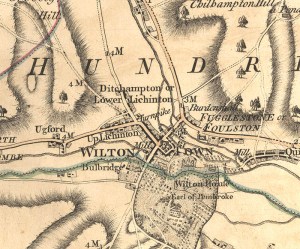
But I must NOT be side-tracked. Well, not for too long!
 Hidden History Research
This is just too good to simply read, so, of course I had to do some internet looking. This mysterious Muriel was buried next to the Venerable Bede according to the Canons of Laon (cited by Turville=Petre). But a monk named Alfred dug up his bones and travelled with them, ending up in Durham. (I hope I am remembering correctly where Bede’s tomb is located today). Now…I am aware of a German nun, Hrotsvitha, who is considered the first woman to write drama in Latin since antiquity. She lived and wrote in the 10th century, two hundred years after Muriel. https://en.wikipedia.org/wiki/Hrotsvitha
One of the snippets in JSTOR summaries on Muriel said that there is no extant work of hers. But…if she wrote in Latin, then would it have been possible for her to assist Bede in his written homilies (which were used all over Europe). Or even original pieces of her own. And if she was buried at Jarrow, was she in fact a nun? I thought Anglo-Saxon nuns had there own convents/abbeys. Sooooo many questions, and tantalizing ones, you raise!
LikeLiked by 1 person
Ooh, Debbie. I didn’t know about Hrotsvitha, Thank you. I used a Jstor article for Murier/Muriel. What really fascinated me was that she could have been a nun or a worldly woman. A virgin or a widow. So much mystery….you’ve got to love it. Yay :o)
LikeLike