
One of the many loves of my life, something that always delights me, are Persian Carpets.
I have several in my home and for a while – on a very small scale – I bought and sold Persian Carpets. Whenever we have been in the Middle East and the family loses me, they always know to go and find the nearest carpet shop.
So,,,I was over-the-moon to find this article about carpet weaving as written from the angle of Hidden History.
BTW. This subject wasn’t even close to my Hidden History Radar, much less an area which shows – once again – how we have been lied to and cheated out of our rightful way of life!
The usual Googlation from Russian to English warning applies.
The history of carpet weaving
from the standpoint of the New Chronology of Fomenko and Nosovsky
(hypothesis: the carpet is a symbol of the Empire)
A.M. Tyurin
“All the paintings of the Italian Renaissance are not worth
one piece of Iranian carpet!”
S. Sargent [Ionina]
Annotation
The existing ideas about carpet weaving in the past are considered. The hypothesis was formulated that the carpet occupied a special place in the medieval Empire (New Chronology of Fomenko and Nosovsky). He symbolized the political, military and spiritual triune power. On the basis of this hypothesis, the main elements of the NC reconstruction of the history of carpet weaving are outlined. Particular attention is paid to issues related to the Pazyryk Carpet dated in accordance with the Traditional History of 5-4 centuries BC. It is established that that the idea of the existence of a developed carpet weaving technology at this time is based on the dating of the Pazyryk carpet from 5–4 centuries BC There is no other reason for the existence of these representations.
- Statement of the problem
In Traditional History (TI), it was assumed that at the time when the Pazyryk carpet was made (5-4 centuries BC) there was a developed technology of carpet weaving, and carpet weavers had a high artistic taste. What is the basis of this “accepted” information? To answer this question, it was necessary to review the existing ideas about carpet weaving in the past and integrate them into the HX-reconstruction of the history of Mankind, performed in the framework of the New Chronology A.T. Fomenko and G.V. Nosovsky (NH FIN) [New Chronology Project Website]. Note that the above question is formulated in the framework of the integration of the Scythian archaeological culture in the National Financial Institute. The integration results are given in the article [Tyurin, 2007, Integration, Scythians].
2. Features of the description of the history of carpet weaving
In the article, the term “carpet” is used in the narrow sense and refers only to handmade wool knotted pile carpets. It is believed that the main historical region of carpet weaving included the territories of Turkmenistan, Iran, Afghanistan, Azerbaijan, Armenia and Turkey, as well as the south of Russia. The countries of this region are producers and exporters of carpets in the 21st century. Two more regions are producers and exporters of carpets – China (including Tibet) and the countries of Hindustan (India, Pakistan and Nepal). The history of carpet weaving, elements of which are listed on the websites of museums, travel and trading companies, as well as government agencies in many countries, has two striking features. The first is that it is politicized and commercialized. That is, here we have the classic case when the facts and conclusions presented, as well as the logical way of linking them, “work” to create a well-defined image of the organization or structure that placed information on the history of carpet weaving on its website. It is the image of a country or (and) a company producing the best carpets in the world, and companies selling them. The second feature – almost all descriptions of the history of carpet weaving are given along the same lines. as well as a logical way of linking them “working” to create a well-defined image of the organization or structure that placed information on the history of carpet weaving on its website. - Reference to the Pazyryk carpet with its assignment to a specific subculture (Persian, Turkmen, Turkish, Armenian) main region of carpet weaving.
An indistinct presentation of fairy tales and legends about carpet weaving in antiquity and the early Middle Ages.
3. A concrete statement of the data on the periods of the flourishing of carpet weaving (began in the 15th century), its decline (began in the 18th century) and revival (beginning from the middle of the 19th century).
According to the same scheme, the official history of carpet weaving is given in my article. In part of the quotations characterizing the state of carpet weaving, the facts and their interpretation are given. The interpretation of facts, performed in the ideological field of TI, is not commented on by me.3. Pazyryk carpet
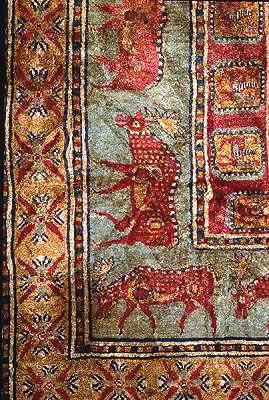
Pazyryk Monument is located in the Altai Mountains on the Ukok Plateau and includes 5 mounds attributed to the classical Scythian period. The famous Pazyryk carpet was discovered in 1949 during archaeological excavations of the largest mound Pazyryk-5.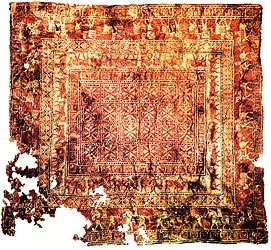 It is kept in the Hermitage. The Ukok Plateau is located in the permafrost zone, which ensured good preservation of the carpet and other artifacts of the burial mound. “The decoration of the carpet is rich and diverse motifs. The central field is occupied by an ornament of 24 cruciform shapes, each of which consists of 4 schematized lotus buds. This composition is framed by a curb with an image of eagle griffins, then there is a curb with 24 figures of grazing spotted fallow deer with characteristic broad-banded horns.
  On the widest lane there are 7 figures of horsemen and dismounted riders. The combination of bright yellow, blue, red colors created a spectacular colorful range. The number of warp threads is about 120 per 1 dm square. Weft threads are connected to warp threads in plain weave. Each pair of woollen warp threads is knotted with different colored threads by hand without any tool. The Pazyryk carpet was made with a symmetrical double knot (chordies), the so-called Turkish (3600 knots are imposed on one square decimeter, over 1250 thousand in the whole carpet). Thus, the carpet has a sufficiently high density. The pile is formed by the ends of the knot, facing up, on the front side and evenly cut with a knife. ”[Early Altai Nomads]. The size of the carpet is 1.89 x 2.00 meters. The time spent on making such a carpet by a modern master is estimated at one and a half years [Rice, 2004]. In the publication [Ionina] it is noted that the “spotted deer” are the yellow-spotted deer living today only in the north of Iran. Wool carpet painted with dyes made from the roots, the juice of plants and husks of insects. Similar dyes were used in ancient Egypt and Mesopotamia [Burda]. There are attempts to interpret the drawings of the carpet [Balonov; About Turkmen carpets].
Traditionally, the time of making the Pazyryk carpet dates back to 5-4 centuries BC. (for example, [Early Altai Nomads]). The results of two independent datings of the Pazyryk-5 barrow, made on the basis of radiocarbon and dendrochronological methods compensation, are in satisfactory accordance: 380 (410-335) year BC. [Zaitseva, 1998] and 350 (+25; -35) BC [Dergachev, 2001]. These dates for the construction of burial mounds do not fully correspond to the results of the dating of artifacts found in them by archaeological and artistic-historical methods – 5th century BC. In the publication [Suter, 2000] the results of dating are given (dating is made on the basis of the radiocarbon and dendrochronological methods of combining) of the Pazyryk carpet: the carpet was made approximately in 250 BC. The last date does not correspond to the dates of construction of the Pazyryk-5 mound. Moreover, if we take it as a fact, it turns out that the archaeological and artistic-historical dating of Scythian artifacts gives an increase in their age by about 200 years. Nevertheless, based on the dating of the Pazyryk carpet and the Pazyryk-5 mound, it can be assumed that it was made in the period 410-250 BC.
According to the results of comparing the manufacturing techniques of the Pazyryk carpet and those technologies that were used in the main region of carpet weaving in the Late Middle Ages and are used today, a definite conclusion was made: Has undergone no fundamental changes. ”[Mac]. In accordance with the most common opinion, the Pazyryk carpet was made in Persia. But there are other reasoned opinions on this. Turkmen [About Turkmen carpets], Turks [Genghis Khan] and Armenians [Arts of Armenia] consider him to be theirs. Based on the above conclusions, it can be concluded that during the manufacture of the Pazyryk carpet, the established technology of carpet weaving and the tradition of carpets decoration already existed, which have retained their main features to this day. The very tradition of carpet weaving originated 500 years before the date of making the Pazyryk carpet [Genghis Khan].4. Fairy tales and legends about carpet weaving
Before the discovery of the Pazyryk carpet, it was believed that “the oldest Iranian carpet in the world is 600 years old. True, the stories about wonderful Persian carpets are found among ancient Greek writers, but after the ancient era no one saw them: they were not preserved ”[Hermitage]. The publications contain the legend of the “Spring Carpet”. “An ancient legend has preserved for us a story about one of the first masterpieces of Persian carpet weaving – the“ Spring Carpet ”of King Khosrov I, woven in the VI century in honor of the victory of the Persians over the Romans and the conquest of the Arabian Peninsula. The drawing of the carpet represented a magnificent image of a blooming garden almost life-size. Jeweled, woven with gold and silver threads, the carpet was truly gigantic: 122 meters long, 30 meters wide. He weighed several tons. They say that Khosrov I loved to walk alone along the “paths” of this “garden” alone. In 641, Persia was captured by the Arabs, and the “Spring Carpet” disappeared without a trace. ”[History of carpet weaving]. The legend of the “Spring Carpet” echoes the information given in the publication [Dagestan]. “The oldest surviving carpet was woven in the 6th century in Derbent and belonged to the Iranian Shah. There are fragments of it. ”Another tale or legend says that the Mongols preserved about 1500 years of the tradition of carpet weaving of the Sayan-Altai region after it disappeared in the 4th century BC peoples of the Scythian culture [Genghis Khan]. Then they brought the tradition of carpet weaving to China after its conquest in the 13th century.5. A specific statement of the history of carpet weaving.
The border between fairy tales and the legends of carpet weaving and a specific statement of the history of this craft can be traced by the following quotes. “As for the ornamental motifs and scenes of carpet products from Iran, the history of their origin is as follows: at the end of the pre-Islamic period, stylized images of animals and human figures were present on the carpets. After the Arab invasion in the design of some carpets, verses from the Koran appear, prayer rugs are made in large numbers. Carpets swept the world of ornamental geometry. The era of the Safavids became the golden age of Persian carpet weaving. The new capital of Persia in the XV century was the city of Isfahan. Here in 1499, the first royal carpet workshop was created. Religious ban on the image of animals and birds was removed, the production of carpets has become one of the main sources of income of the treasury. ”[History of carpet weaving]. “The most ancient of the known carpets of this type [prayer rugs] come from the Ottoman workshops of the 15th century” [Gamzatova, 1998]. Persian carpets made before the 15th century are not preserved. And if so, then information about pre-Islamic carpets, huge numbers of prayer rugs woven before the 15th century, a ban on the image of animals on carpets and its cancellation is not based on real facts. Simply put, these are fairy tales and legends.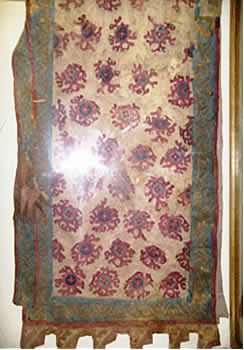
There are Dagestan carpets belonging to the 16th and 17th centuries in museums [Dagestan]. “The most ancient carpets in Turkey can be seen in the Museum of Turkish and Islamic Art in Istanbul, as well as in the Museum of Konya. These are roughly but powerfully ornamented Seljuk carpets dating from the 13th century, discovered at the beginning of this century in the Seljuk capital Konya and the nearby city of Beysehir. ”[Turkish carpets]. If we count the dates of Seljuk carpets reliable, then the chronological gap between them and the Pazyryk carpet is about 1500 years. This means that the thesis about the presence of carpet weaving in the period of the 3rd century BC. – 13 century AD not based on artifacts, that is, on real carpets that have been preserved.
6. What is a carpet?
Functionally, the carpet is floor covering. In nomadic culture, it can also serve as a curtain dividing the space of a yurt into segments or its door. Consumer characteristics of the carpet are losing in all positions of consumer characteristics of the felt (felt). This is an indisputable fact. Especially a striking loss in terms of “the price of the product – the complexity of its manufacture.” I happened to observe the process of making the Kazakh feline. It was attended by women of the clan (about 10 people). Only one fixture was used – a reed mat. It is laid out in an even layer washed, combed lamb wool. Then, on top of it, drawings (patterns) are laid out with dyed wool. All this is rolled up and rolled out within a few hours. In this case, the roll was watered with boiling water. After drying, the felt was ready for use by its intended purpose. And for the manufacture of carpet you need a few years of monotonous work. Incomparable labor costs for the manufacture of felts and carpets determine their incomparable prices. It is possible to make an unequivocal conclusion: the price of a carpet is orders of magnitude higher than its relative (with respect to the felt) consumer value. From the middle of the 19th century, a whole industry has been working on concealing this simple truth. I must say that this industry is based on a real premise,
Today, the carpet is a symbol of wealth. But this carpet symbolism is an indirect reflection of its symbolism in the past. In the symbolism of the carpet of the late Middle Ages, two interrelated components can be distinguished. The carpet is a sacred symbol and the carpet is a symbol of power. As a sacred symbol, the carpet should be present in a Muslim mosque. He was present in the Christian churches. “A whole group of Turkish carpets of the XVII – XVIII centuries, including prayer ones, come from the Protestant churches of Transylvania. They decorated altars, chairs, parapets of Catholic cathedrals. ”[Gamzatova, 1998]. “… in the painting of the Renaissance we can note a rather narrow and not indifferent circle of subjects for us, using carpets. This is the threshold under the throne of the Madonna and Child, the carpets at the altar and in the story “The Annunciation.” A carpet appears where we are confronted with a sacred, divine, miraculous. ”


On this occasion, I have personal observations. The floor was covered with carpets in a Sikh temple located near the tomb of Humayun (Delhi, India). In Nepal, on a mountain near the city of Pagara there is a huge Buddhist stupa (the grave of a statesman of the 20th century). There is a small Buddhist temple near the stupa. In it is something like a chair-throne, according to the inscription on which it can be understood that this is an honorable place of the head of local Buddhists. So, the chair-throne is on the carpet.
There is ample evidence that the carpet was a symbol of political power in the late Middle Ages. As an example, quotes from publications. “In the Persian miniature of the 16th — 17th centuries, a carpet is a sign of the presence of a royal personage.” [Gamzatova, 1998] 
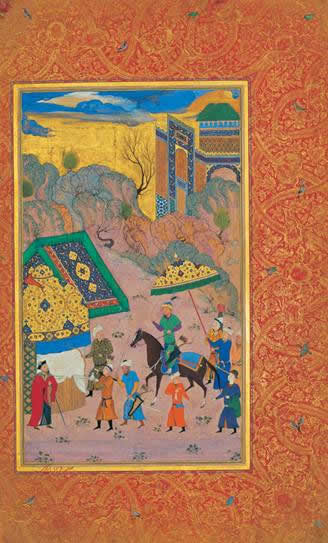
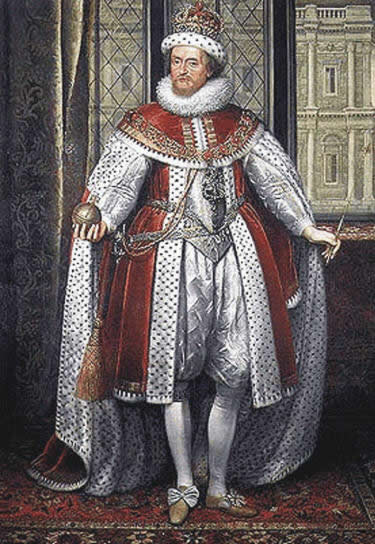
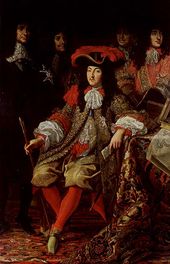
“In the Middle Ages, during coronation or major holidays, carpets were considered an important attribute, their possession was a sign of belonging to a noble family, and therefore they were expensive and were available only to the royal family or the nobility close to the court.” [History of ornament]. “With the Sun King [Louis XIV], who donated a significant part of the royal treasury to cover their floors, no one except him dared to step onto the carpet: he was considered to be the same sign of royal dignity as a scepter in power.” [Mac]. Examples of this are the parade portraits of the English monarchs. The carpets on which they stand are part of their power attribute.

An important place was occupied by the carpet at the court of the French kings
Some elements of the current state of carpet weaving I traced with my own eyes. Indian carpets (Delhi, Jaipur) have high consumer qualities. They are thick and dense. Their color is dominated by reddish hues. But you can’t hang such a carpet on the wall. It is heavy and over time is deformed by its weight. He has a place on the floor in a warm and dry Russian apartment or cottage. Carpet weaving of Tibet (Chinese Tibet) is not yet included in the scope of tourism business. Tibetans make carpets for themselves, so they are simple and functional. Chinese carpets (Beijing, Shinan, Guangzhou) are elegant and graceful. But in them “a little life.” Too they are “correct”. Prices for those Chinese carpets that I saw from the first thousand dollars. But in China, prices for all “dual” goods (for themselves and for tourists) differ by “two orders”.
Nepalese carpets (Kathmandu) fascinated me. This is a work of art. The finest pattern, the chosen combination of colors (not bright shades prevail), the overall composition … I saw a carpet factory located on the edge of the Kathmandu valley. From the slope of the mountain through binoculars were visible “stages of production” of handmade carpets. It is believed that the tradition of carpet weaving in Vietnam was brought to the French. The factories they built are still working today. Vietnamese carpets have an indisputable advantage – a harmonious ratio of price and quality. Their density is small – only 900 knots per square decimeter, but the price is low – $ 230 for a 2.0×3.0 meter carpet. Russians are buying these carpets. About any criticism of their quality, I have not heard. In Vietnamese stores, you can order the manufacture of a carpet of fixed size, color and pattern. The price of “ordered” carpet is slightly higher than the nominal. The term of the order – 2-3 months. On this basis, the time limits for making handmade carpets given in the publications appear to be overstated. If we assume that a carpet with a size of 2.0×3.0 meters and a density of 900 knots per square decimeter can be made in two months, then we get a “carpet weaving speed” of 270,000 knots / month. There are 1250 thousand knots in the Pazyryk carpet. It means that it could have been made in about 4.6 months.
7. The main elements of the NC reconstruction of the history of carpet weaving
One of the main components of the NC is the Global Chronological Map [HRON1]. It is based on the analysis of mathematical-statistical methods [ХРОН2] information given in historical chronicles. The map reflects the two main discoveries of the NC: TI has a clear structure (the first discovery), on the basis of which it is possible to build a logical and consistent hypothesis that places all the written history of Humanity in the last 1000 years (the second discovery). In accordance with this hypothesis, TI was obtained by “gluing together” four practically similar chronicles. One of them corresponds to the realities of the second millennium AD. (until about the 17th century AD). It is also a rigid matrix for the formation of three other chronicles, which are shifted relative to its prototype by approximately 333, 1053 and 1778 years. These are global chronological shifts. There are other chronological shifts in the history of individual states and regions. On the basis of the two first discoveries, the founders of the National Financial Institutions of Finland made the third discovery: the Great Medieval Russian Empire existed in the 13th and 16th centuries [HRON5].
“A NEW CONCEPT OF THE HISTORY OF THE MONGOLIAN CONQUEST AND ITS NEW DATING OF THE BEGINNING OF THE XIV CENTURY OF A NEW ERA, that is, one hundred years later than the generally accepted today. According to this concept, the “Mongol”, that is, the great conquest, began from Vladimir-Suzdal Russia and was primarily Russian. More precisely, it was Russian-Turkic, that is, multinational.
The result was a huge Great = “Mongol” Empire, well known in Scaligerian-Miller history as the Empire, stretching from Western Europe and Egypt to China. The radical difference between our reconstruction and the traditional one is that the core of this Empire, that is, where it started from, is not wild desert steppes on the border of China, but Vladimir-Suzdal Russia-Horde. In addition, the Scaligerian history significantly downplayed the size of the Empire. Pretending that many countries allegedly never belonged to it. Which, as we show, is wrong. Later, after about a hundred years, Great = “Mongolian” The empire was divided into two closely related parts. The first is the Russia-Horde, the Orthodox part, primarily the Slavic. The second is Turkey-Atamania = Ottomania. This part, mainly Turkic, then, in the XVII-XVIII centuries, will become a Muslim country. We will stick to the old spelling of the name of the Ottoman Empire, instead of the modern – Ottoman. That is, previously they wrote one T, and not two T, as today. instead of modern – Ottoman. That is, previously they wrote one T, and not two T, as today. instead of modern – Ottoman. That is, previously they wrote one T, and not two T, as today.
The specified national division is very conditional. There were, and there are, many Turks in Russia, and in Turkey-Atamania, before the Balkans fell away from it in the 19th century, there were many Slavs. ”
In accordance with the National Financial Certificate, one can distinguish several symbols (or distinctive features) of the Empire. These are, first of all, the crescent [ХРОН4, ХРОН5, ХРОН6], the double-headed eagle and the royal crown [Nosovsky, Reconstruction, chapter 15], monumental buildings, including stone and concrete pyramids, and earthen pyramids-mounds [ХРОН5, chapter 19], A special type of army is a horde consisting of Cossack-Tatars [ХРОН4, Chapter 3]. The creators of the Financial and Financial Institutions of Ferghana suggested the following assumption: “Apparently, it was the custom in Russia-Horde to wear a turban. Hence the turban passed to the east, to Turkey and other countries. ”[HRON4, Chapter 3]. Perhaps the turban is also one of the symbols of the Empire. Maybe, Belt wrestling (kurash) should also be attributed to the symbols of the Empire [Kurina, 2005]. We assume that the carpet should be attributed to the symbols of the Empire. In the era of the Empire (14-16 centuries), he symbolized the political, military and spiritual triune power. On the basis of this hypothesis, the main elements of the NC reconstruction of the history of carpet weaving are outlined.
The empire arose in the 14th century in Eastern Europe and began to expand to the west (Central and Western Europe), south (Middle East, Egypt), southwest (India) and east (Siberia). Most likely, the symbolic perception of the carpet arose during the formation of the Empire. Together with the expansion of the Empire, the area of its symbolic perception expanded, as well as the area of carpet weaving as a craft. Moreover, these two processes were interrelated. The rulers of the new imperial regions needed the symbols of their power. But the production of these symbols in sufficient volume could not be ensured from the traditional centers of carpet weaving, allegedly located on the territory of modern Iran and adjacent regions. Carpet weaving began to develop in new areas of the Empire. All this stimulated the development of three interrelated processes.
1. Growing demand for carpets. “Thanks to these qualities, Persian carpets are so extraordinarily popular in Europe, where they were first imported in the 15th – 16th centuries. Persia supplied with carpets many royal courts and aristocratic houses of Europe. France alone spent so much money on the purchase of Persian carpets that it significantly undermined its economy. ”[Nesterova]. “Cardinal Wolsey” imported from Turkey in 1520, where they were greatly admired by Henry VIII. As a result, they were considered the most beautiful items of home furnishings.
2. The appearance in the traditional regions of the carpet weaving industry of their production. “Somewhat later, during the golden age of the Safavids for carpet weaving (1502–1736), numerous carpet weaving centers were established in Tabriz, Qazvin, and Isfahan, equipped with everything necessary for the process of making carpets. Special shah officials were required to check the work on the carpets in these workshops in order to preserve the originality and exclusivity of the products. ”[Nesterova]. The first royal carpet workshop was established in Iran in 1499 [History of carpet weaving].
3. Creation of workshops for the production of carpets in new areas of the Empire. “It was under Louis XIV, in 1605, that the artist Pierre Dupont, known for his Bible illustrations, opened the first carpet workshop in France at the Louvre.” [Mac]. (1605 was the reign of Louis XIV’s grandfather Henri Quatre G.B.)
Most likely, another process was developing – transit trade in carpets. But this question has not yet been worked out.
In the 17th century, another global process began – the collapse of the Empire, which was accompanied by the transformation of the meaning of its symbols. The carpet of the symbols of imperial power has become a symbol of just power. In the regions where regional power structures were formed, the demand for carpets in the 17th and 18th centuries was high. Perhaps one of these regions was Georgia. “According to historical sources, the influence of carpet traditions on Georgia was observed in the XVII-XVIII centuries, during the period of cultural and political ties with Iran. Then the import of carpets from Iran increased. ”[History of ornamental language]. However, in the 18th century, the demand for carpets produced in traditional regions of carpet weaving fell, including by organizing their production in those regions to which they were exported in the 16-17 centuries. Carpet production in traditional carpet weaving regions has declined. “During the war with Afghanistan, Turkey and the Russian Empire, the sophisticated art of carpet making in Iran declined, only the nomads and craftsmen in small villages kept their carpet making skills.” “Stagnation” in carpet weaving continued until the mid-19th century. “A new flourishing of carpet weaving came in Persia in the 19th century, the export of carpets became an important component of the state’s revenues.” which is carried out due to the further transformation of its “imperial” sense. The carpet has ceased to be a symbol of power, but remains a symbol of what power gives. And she gives wealth. Today, the carpet – a symbol of wealth. But in some regions, the carpet today is a symbol of power. For example, in one of the oldest centers of the Empire – the Moscow Kremlin. The most important symbolic state actions are carried out on the carpet – the meeting of the President of the Russian Federation with the heads of other states, But in some regions, the carpet today is a symbol of power. For example, in one of the oldest centers of the Empire – the Moscow Kremlin. The most important symbolic state actions are carried out on the carpet – the meeting of the President of the Russian Federation with the heads of other states But in some regions, the carpet today is a symbol of power. For example, in one of the oldest centers of the Empire – the Moscow Kremlin. The most important symbolic state actions are carried out on the carpet – the meeting of the President of the Russian Federation with the heads of other states presentation by ambassadors of credentials to the President, awarding the President of Russian and foreign citizens with the highest orders and medals of the Russian Federation [President of Russia].

You can add a few strokes to the main elements of the NC reconstruction of the history of carpet weaving. All the tales and legends about carpet weaving in antiquity and the early Middle Ages are almost unambiguously interpreted in the framework of the Financial and Financial Information Commission as phantom reflections of the events of the late Middle Ages. In accordance with TI, the chronological mark of the existence of the Seljuk Turks of the 11th – 13th centuries. Their carpets in the Museum of Konya Museum are dated 13th century. In accordance with the National Financial Code, the Seljuk Turks are most likely Tatars of the 13th – 16th centuries [HRON5, part 5, chapter 17]. This extends the chronological dating interval of Seljuk carpets to the 16th century, inclusive. In TI it is considered that the traditions of carpet weaving came to China after its conquest by the Mongols in the 13th century. According to the Financial and Financial Institutions, “the beginning of the reliable history of China (on its modern territory) is only the epoch of the coming to power of the Manzhur dynasty. That is MONGOL. That is, the dynasty that came from Russia-Mongolia (= Great). This dynasty, most likely, was Russian or Tatar. ”It happened in the 17th century. [HRON5, Part 2, Chapter 6]. This milestone should be taken as the beginning of carpet weaving in China. In TI, it is believed that the Mughals, who conquered it in the early 16th century [Genghis Khan], brought the tradition of carpet weaving to Hindustan. In accordance with the National Assembly Financial Regulations, the conquest of Hindustan by the Mogul is its second conquest by the troops of the Empire. The first conquest of Hindustan by the troops of the Empire – the Aryans (Cossacks-Horde), occurred in the 14th century [Nosovsky, 2007, Cossacks-Aryans]. Then the traditions of carpet weaving were brought to the region. It can also be assumed that the phrase “brought to the carpet”, roughly meaning today “called to the chief to analyze the results of the performance of official duties,” originated during the time of the Empire.
8. Pazyryk carpet in the New Chronology
“Russia =” Mongol “The Empire was divided into regions, or into the Hordes. There were the White Horde, the Blue Horde, but there was still one Horde. The most eastern. And it was called the PEGAIR HORDE. This name we find in the “Dictionary of the Russian language XI-XVII centuries” [790], the word Horde, p.64. The expression “The Pinto Horde” was used in Russia in the 17th century: “Drawing … of the Muscovite State … from the Ob River up the Ob ‘Obdorskaya and Yugorskaya and Siberian lands to Narym, to the Pege Horde” [790], p. [HRON5, Part 2, Chapter 6]. Thus, the territory of the Altai region was part of the Pinto Horde.
According to the results of the dating of the Pazyryk-5 mound and the Pazyryk carpet, it was assumed that it was made in the period 410-250 BC. .. It can be assumed that the Ukok Altai highland plateau in the 17th century was the burial place of the leaders of the Peg Horde. Naturally, in this horde, the carpet retained its imperial symbolic meaning until the 17th century, which is why it, along with the body of one of its leaders, fell into the elite grave mound Pazyryk-5. But in the 17th century and the second half, most of the leaders and people of the military class of the former hordes of the Empire (including the Peg Horde) united, conquered China and remained there [HRON5, part 2, chapter 6]. Most likely, the descendants of the leaders of the Pinto Horde are buried on its territory. Perhaps their funeral was accompanied, as was the custom in the horde, by the construction of burial mounds. Perhaps they are identified today as the mounds of very ancient Chinese emperors. Who knows?
The Ukok Plateau continued to serve as the burial place for the Peg Horde warriors who did not withdraw to conquer China. Their graves are marked by small and medium barrows dated by radiocarbon and dendrochronological methods 230-190 BC. [Slusarenko, 2001]. Re-falsified date of their construction: 1680-1705 AD. And at the beginning of the 18th century Russian immigrants came to Altai. It was established that “the earliest period of Altai’s settlement by the Russian population was in the first half of the 18th century, beginning in 1718, the first reliable date for the formation of a settlement in the territory of the region. It is characterized by the colonization flows of servicemen, peasants, schismatics from the European part of Russia and other areas of Western Siberia, which were the main source of settlement. “[Vladimirov, 2005]. In the period of 1718-1800, 552 settlements appeared in the Altai Territory, in the period 1801-1900 – 474, in the period 1901-2000 – 7403. The Russian colonization of Altai that began put an end to the funeral tradition of the leaders and warrior Pegeoi on the Ukok Plateau. According to the results of anthropological and genetic studies, it can almost certainly be argued that the descendants of the Pazyryk culture population are the peoples of Northern Altai. It is not surprising that their shamans consider the Ukok Plateau to be a sacred place for the Altaians. After all, the last burials on it of the leaders and warriors were made at the turn of the 17th and 18th centuries, that is, within the “folklore” memory of the indigenous people of Altai. But by malicious intent, or by wild thoughtlessness, the late medieval kurgans of the leaders and warriors of the Pied Horde were called Scythian and attributed to the second half of the 1st millennium BC. So the late medieval Pazyryk carpet became very, very ancient, and the Atai peoples “lost” the graves of their ancestors. or, according to wild thoughtlessness, the late medieval kurgans of the leaders and warriors of the Pinto Horde were called Scythian and attributed to the second half of the 1st millennium BC. So the late medieval Pazyryk carpet became very, very ancient, and the Atai peoples “lost” the graves of their ancestors. or, according to wild thoughtlessness, the late medieval kurgans of the leaders and warriors of the Pinto Horde were called Scythian and attributed to the second half of the 1st millennium BC. So the late medieval Pazyryk carpet became very, very ancient, and the Atai peoples “lost” the graves of their ancestors.
9. Conclusion
So what is the basis for “it is assumed that at the time when the Pazyryk carpet was made (5-4 centuries BC) there was an advanced technology of carpet weaving, and the carpet wearers had a high artistic taste”? On the Pazyryk carpet. The technology of its manufacture is identical to modern. Hence the conclusion about the presence in 5-4 centuries BC. developed carpet weaving technology corresponds to reality. Well, high artistic taste is a relative concept. If today we put up for sale an exact copy of the Pazyryk carpet (without reports of any additional information), then it will not stand out among modern carpets for artistic merit. But if we consider the Pazyryk carpet to be the creation of carpet-makers of 5-4 centuries BC, then we must admit that at that time they had an artistic taste almost identical to the artistic taste of today’s masters. And he is the last high – today’s carpets are highly artistic products. So we got an answer to our question. Representations of the existence in the 5-4 centuries BC developed carpet weaving technology and the presence of high artistic taste in carpet wearers are based on dating the Pazyryk carpet (one single carpet!) 5-4 centuries BC We emphasize that representations are not based on the carpet, but on the results of its dating. There is no other reason for the existence of these representations. If the Pazyryk carpet dates back to the Late Middle Ages, then the views on the technological level of the craft and the artistic tastes of the artisans will automatically turn into one of the TI’s tales of “antiquity”.
In the process of finding the answer to the question formulated in the “Statement of the Problem,” partial results were also obtained. Revealed a clear association of the Virgin Mary and the carpet. Obviously, you can track the time of its occurrence. You can make and systematization of patterns on carpets associated with the Virgin Mary. For example, at least two of them have a swastika.

A lot of things can be done by developing the theme “Carpet in the past of Humanity”. Therefore, in the photo gallery, which is an annex to the article, the association of the Virgin Mary and the carpet is represented by 23 paintings by famous artists of the Renaissance. (I have not included all the photos! G.B.) They serve as illustrations to the article and can serve as an information base for further research. The photo gallery was formed by the participants of the “New Chronology” site forum at my request. I thank everyone who took part in its formation.
 Hidden History Research